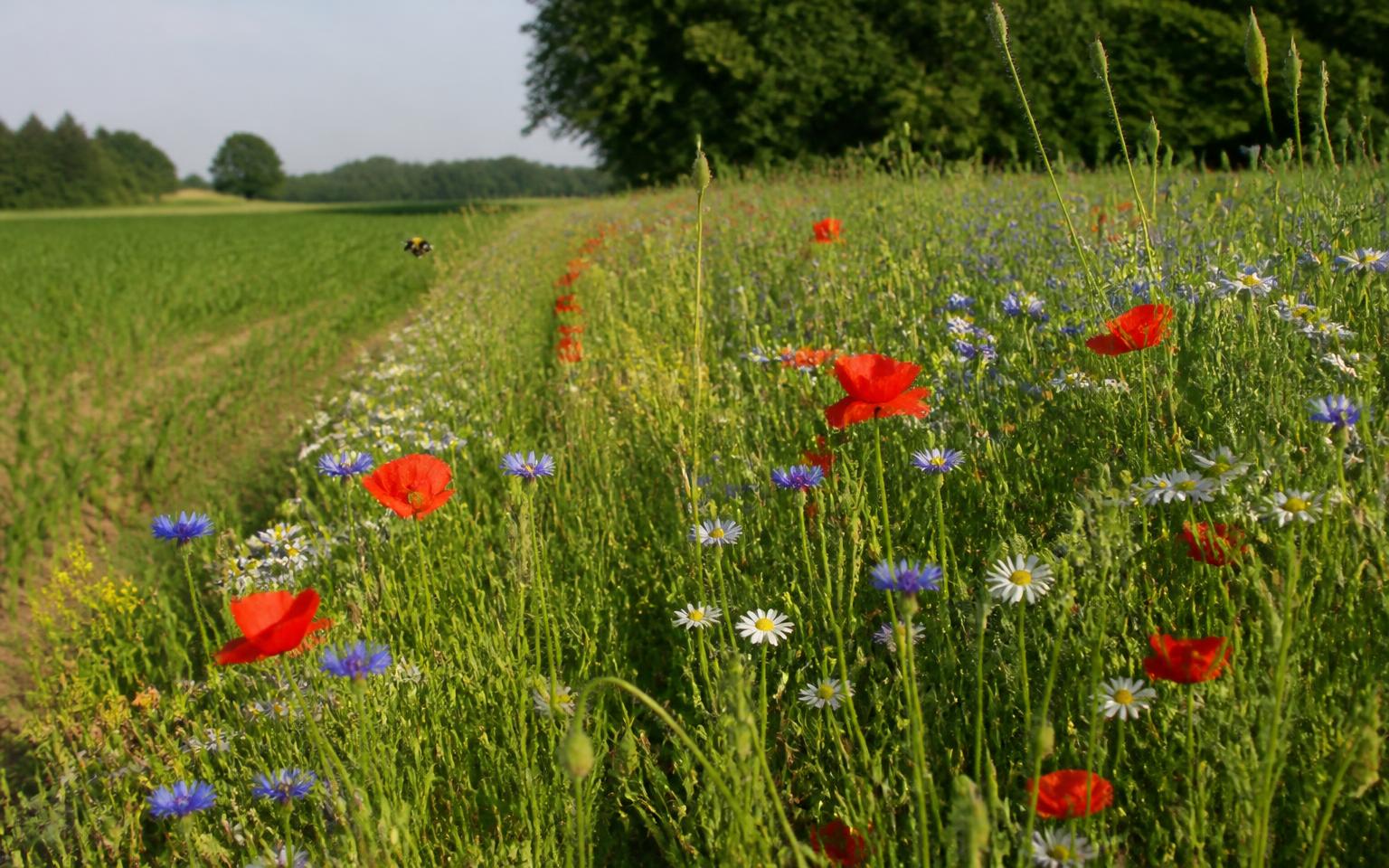
Flower meadows
More flowers, more pollinators, more colour — a food source for wild bees, bumblebees and butterflies.
Discover this projectOur projects
Make roughly 50 metres of new landscape element possible: a varied hedgerow of mainly native shrubs and trees.
en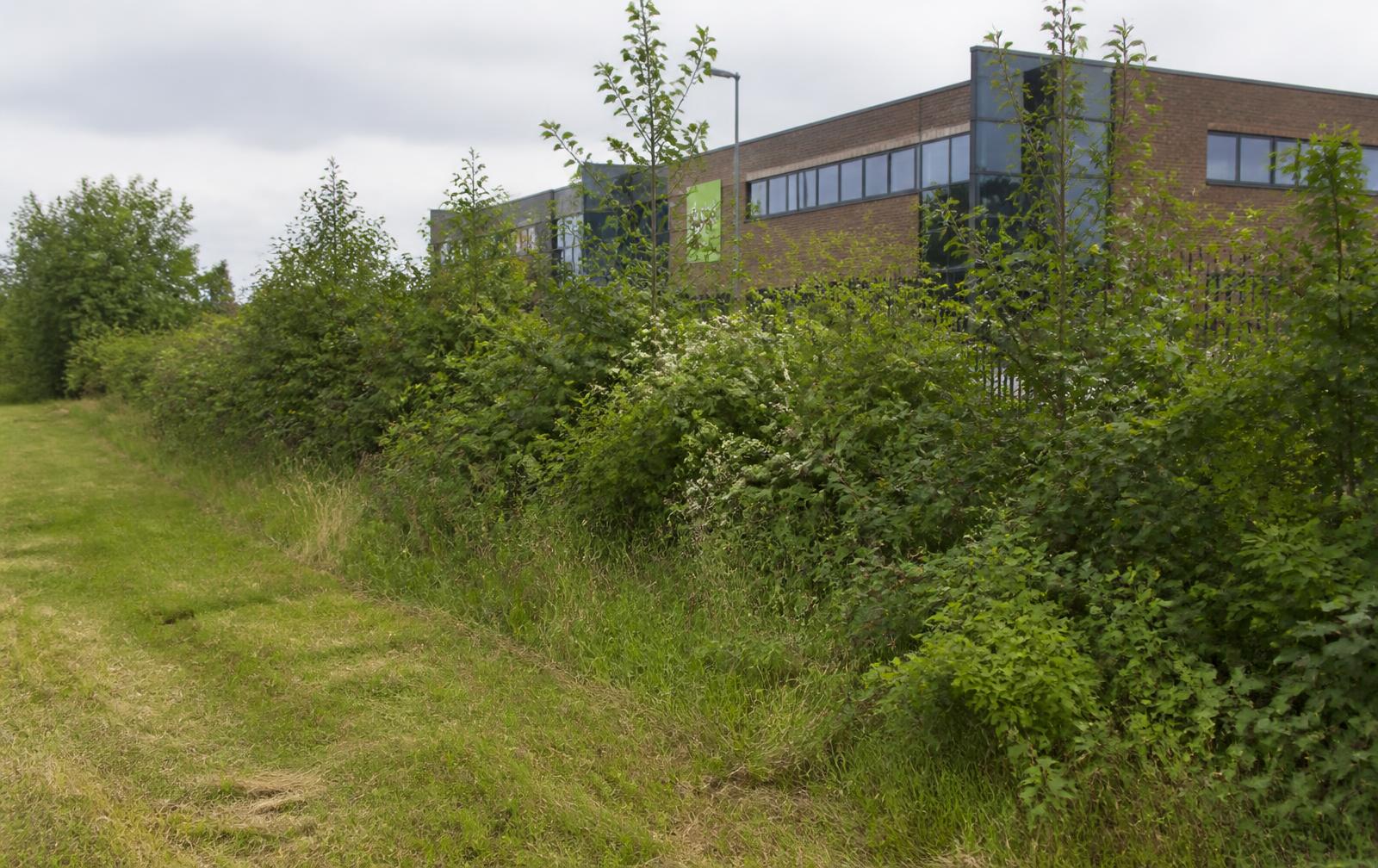
A hedgerow is much more than a row of shrubs along the edge of a site.
Well planted and well managed, it becomes an elongated, natural structure of different shrubs and, where suitable, trees. Blossom appears in spring, insects find food, birds can nest and shelter, berries and fruit follow later in the season, and underneath a sheltered world of herbs, leaves, branches and soil life develops.
Hedgerows have also been part of our rural landscape for centuries. They marked field boundaries, sheltered against wind, supplied wood and gave cover to livestock. Today they can fulfil an important function — not only as landscape, but above all as habitat and as a connecting route for wildlife.
With the KURBI project Native hedgerows we help companies create new hedgerows in places where space is available.
One subscription of €1,000 excl. VAT makes the creation of approximately 50 running metres of new hedgerow possible.
A hedgerow is an elongated landscape element consisting mainly of shrubs and trees. That distinguishes it from a classic, tightly clipped hedge: a hedgerow gets more room to develop naturally and can contain several vegetation layers.
Herbs and grasses can grow at the base. Above them, low and taller shrubs develop. In suitable places trees can be part of the structure as well. A mature hedgerow therefore comes to resemble a long, narrow woodland edge.
Depending on the location, KURBI can work with species such as hawthorn, blackthorn, hazel, dog rose, guelder rose, alder buckthorn, elder, rowan and other mainly native species.
The precise composition is not fixed identically in advance for every hedgerow. Soil, available width, moisture, light, surrounding vegetation and the intended management differ from place to place. The starting point stays the same: a varied hedgerow that suits the place where it is planted.
Much of the ecological value of a hedgerow lies in its variation. A closely mown strip of grass offers only limited living conditions. A hedgerow, by contrast, holds different plants, heights, temperatures, light conditions and sheltered places close together, so very different animals can find something there.
Food for insects. Flowering shrubs and trees can supply nectar and pollen to wild bees, bumblebees, hoverflies, butterflies and other insects in spring and summer. By combining different plant species, flowering can be spread across different moments of the year. That matters: an insect gains little from an abundance of flowers for two weeks if there is hardly any food during the rest of its active period. KURBI therefore wants to plant not only a lot, but thoughtfully.
Food for birds. After flowering, many hedgerow species can produce berries, fruit, nuts or seeds. Hawthorn, blackthorn, dog rose, elder and rowan are examples of plants that can offer food later in the season to birds and other animals. At the same time, countless insects and other small invertebrates live among leaves, branches and bark — food for birds as well. A hedgerow can thus become part of the local food chain across several seasons.
Food alone is not enough. Animals also need places to hide, rest, overwinter or reproduce, and a dense hedgerow can be particularly suitable.
Thorny shrubs such as hawthorn and blackthorn in particular can offer birds relatively sheltered nesting opportunities; the dense structure makes it harder for certain predators to reach a nest. Outside the breeding season that shelter matters too: birds can rest there and seek protection from bad weather.
Closer to the ground, small mammals, amphibians and all kinds of invertebrates can benefit from the sheltered conditions, depending on the surroundings of the hedgerow.
Anyone who only looks at the shrubs sees just part of the ecosystem. Organic material collects under an older hedgerow: leaves fall, small branches die back and plant remains are slowly broken down by fungi, bacteria, earthworms and countless other soil organisms.
In this way a nutrient cycle develops in which dead plant material supplies nutrients to the ecosystem again. A hedgerow is not only interesting above ground; a richer soil life can gradually develop beneath it too.
Perhaps one of the most important functions of hedgerows is less visible. Nature does not consist only of separate green spots; for many species it is essential to be able to move between them.
Imagine a copse on one side of a site and a pond, orchard or other green area 300 metres away. If only open terrain lies in between, that distance can be a considerable barrier for certain small animals. A hedgerow can then function as an ecological connection: animals can move along it while finding food and shelter.
A hedgerow can therefore become ecologically more interesting when it connects to an existing hedge, woodland edge, tree row, pond, flower meadow or other green structure. When choosing locations, KURBI does not only ask "Where can we plant a hedgerow?" but also "Where can this hedgerow make the most difference?"
Hedgerows are not a modern invention. They were long part of the small-scale agricultural landscape in Flanders, used as field boundaries, supplying firewood and utility wood, sheltering against wind and giving cover to livestock.
Because of changes in agriculture and land use, many such small landscape elements have disappeared. With new hedgerows we therefore not only create new nature; we also restore a piece of the traditional landscape.
That fits the philosophy of KURBI: progress does not always require inventing something entirely new. Sometimes solutions that were part of the landscape for centuries can take on a valuable contemporary function again.
Hedgerows are also particularly interesting for companies with unused plot edges.
Around company buildings there are often grass strips, fences or little-used zones with relatively little ecological value. Where enough space is available and the location proves suitable, part of that can be transformed into a hedgerow.
That has a particular advantage: the company does not need to own external nature land in order to create space for nature. The biodiversity measure can arise literally around its own business activities.
Employees and visitors can follow its development, and an uninteresting plot edge can turn into a recognisable green landscape element over the years.
Not every site is suitable, so KURBI always assesses the specific location. Companies without suitable space of their own can just as well support a hedgerow at another available KURBI project location.
KURBI opts in principle for a varied combination of mainly native species suited to the location. Depending on the circumstances, this may include:
That list is deliberately not exhaustive. A dry, sunny soil does not necessarily call for the same planting as a wetter site, and the available space and the connection with the surrounding landscape play a role too.
KURBI therefore does not want to place a standard package blindly on every location. Nature helps determine what we plant.
For this project KURBI applies the same clear basic price as for the other project components: €1,000 excl. VAT per project year.
With one subscription, KURBI aims to make possible the creation and follow-up of a hedgerow module of approximately 50 running metres — a project value of roughly €20 per running metre.
The contribution covers, among other things, suitable planting stock, the organisation and execution of the planting and the normal follow-up needed to let the hedgerow develop. The concrete planting density, species distribution and layout can differ per location; KURBI chooses these in the light of ecological and practical circumstances.
We want to be concrete towards our partners. We therefore prefer to state how much new hedgerow a contribution actually aims to realise, rather than speaking only of a general contribution to biodiversity.
At the same time, nature is not an industrial standard product. On one site 50 metres can be planted relatively easily. On another, special ground preparation, protection against livestock or game, difficult access, exceptional soil conditions or other provisions may be necessary.
Approximately 50 metres therefore serves as the standard KURBI hedgerow module. Where exceptional circumstances cause significant additional costs, this is examined and discussed in advance. Special earthworks, heavy fencing or other exceptional infrastructure are not automatically included in the standard contribution.
A hedgerow is not necessarily planted immediately after a subscription. Planting preferably takes place in a suitable planting season and also depends on available land, local agreements, planting stock and the number of subscriptions. For certain KURBI projects a minimum number of subscriptions may first be collected before the project actually starts.
A flower meadow can change visibly within a few months. A hedgerow tells a longer story. At planting the shrubs are still small; then they start to grow, branch out and flower. Over time more shelter, fruit, litter and structure appear.
That is not a disadvantage — it is one of the attractive qualities of this project. A company does not only finance what stands there today, but helps a landscape element come into being that can keep growing year after year. A well-managed hedgerow can remain present far longer than the original project period.
A well-planted hedgerow can contribute to:
KURBI deliberately formulates these as potential ecological effects. Nature cannot be ordered by contract. Which species eventually use a hedgerow, and how quickly, depends partly on the location, surroundings, weather and many other ecological factors.
KURBI therefore promises no particular number of birds, insects or other species. We create the conditions in which nature gets more opportunities.
KURBI Native hedgerows — €1,000 excl. VAT — approx. 50 metres of new hedgerow
With mainly native trees and shrubs suited to the location, professional organisation of the planting and normal follow-up within the KURBI project.
The concrete execution depends on, among other things, the suitability and availability of the location, planting season, local conditions and available project capacity. Special earthworks, fencing or exceptional provisions are not automatically included in the standard project contribution. Ecological effects depend on natural conditions and cannot be guaranteed.
This project reinforces other KURBI measures. Combining them increases the ecological value of the whole.
Would you like to explore the ecological, landscape and practical meaning of hedgerows further? The external sources below offer additional background on their role in biodiversity, landscape management and ecological connectivity.
More information on Flemish policy for the restoration, management and expansion of hedgerows.
Scientific background on biodiversity, ecosystem services and the role of hedgerows in the landscape.
Practical, accessible information on creating, valuing and managing hedgerows.
External links open in a new tab. KURBI is not responsible for the content of external websites.
More flowers, more pollinators, more colour — a food source for wild bees, bumblebees and butterflies.
Discover this project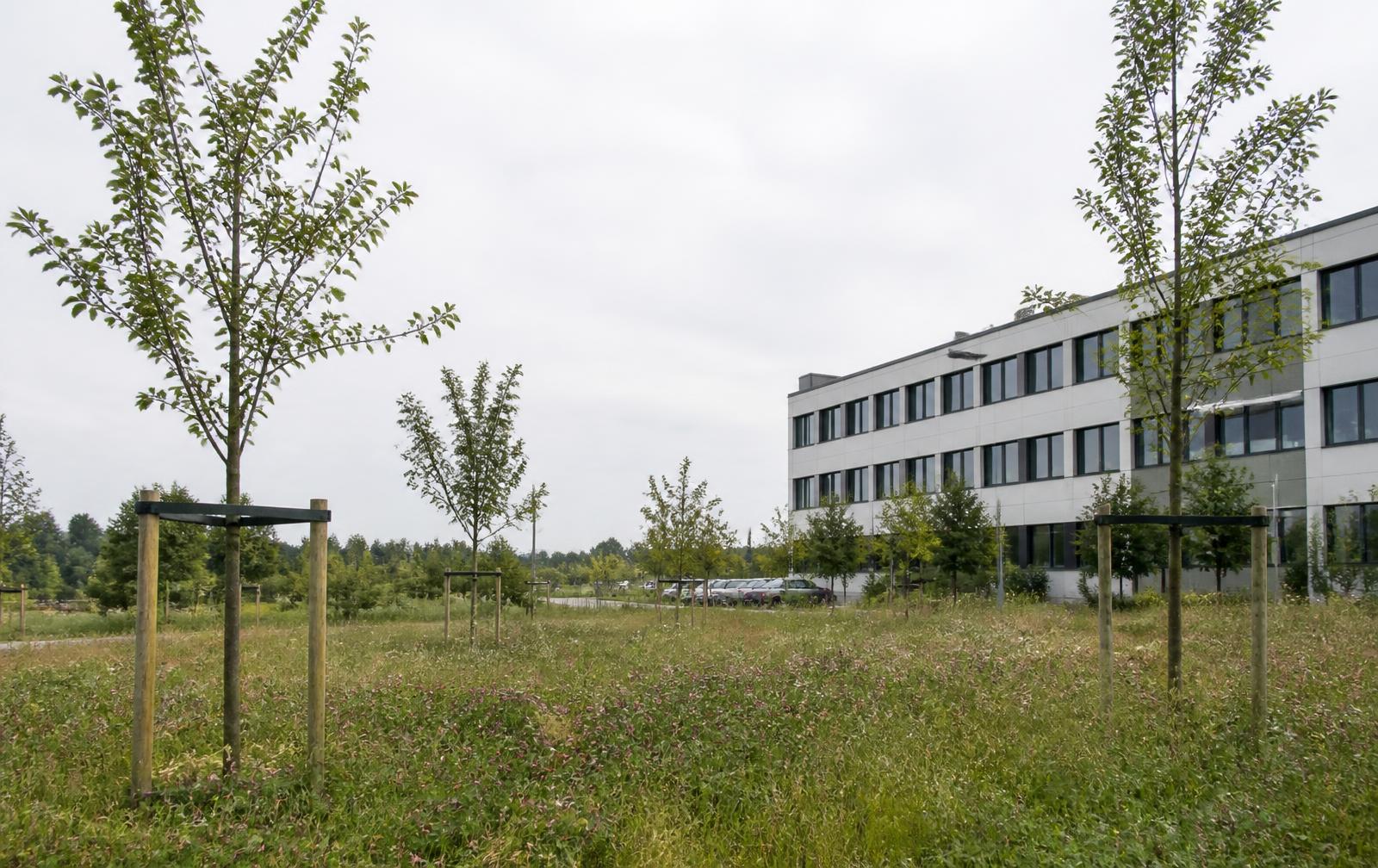
Help plant five quality high-stem fruit trees, with particular attention to old and regional varieties.
Discover this project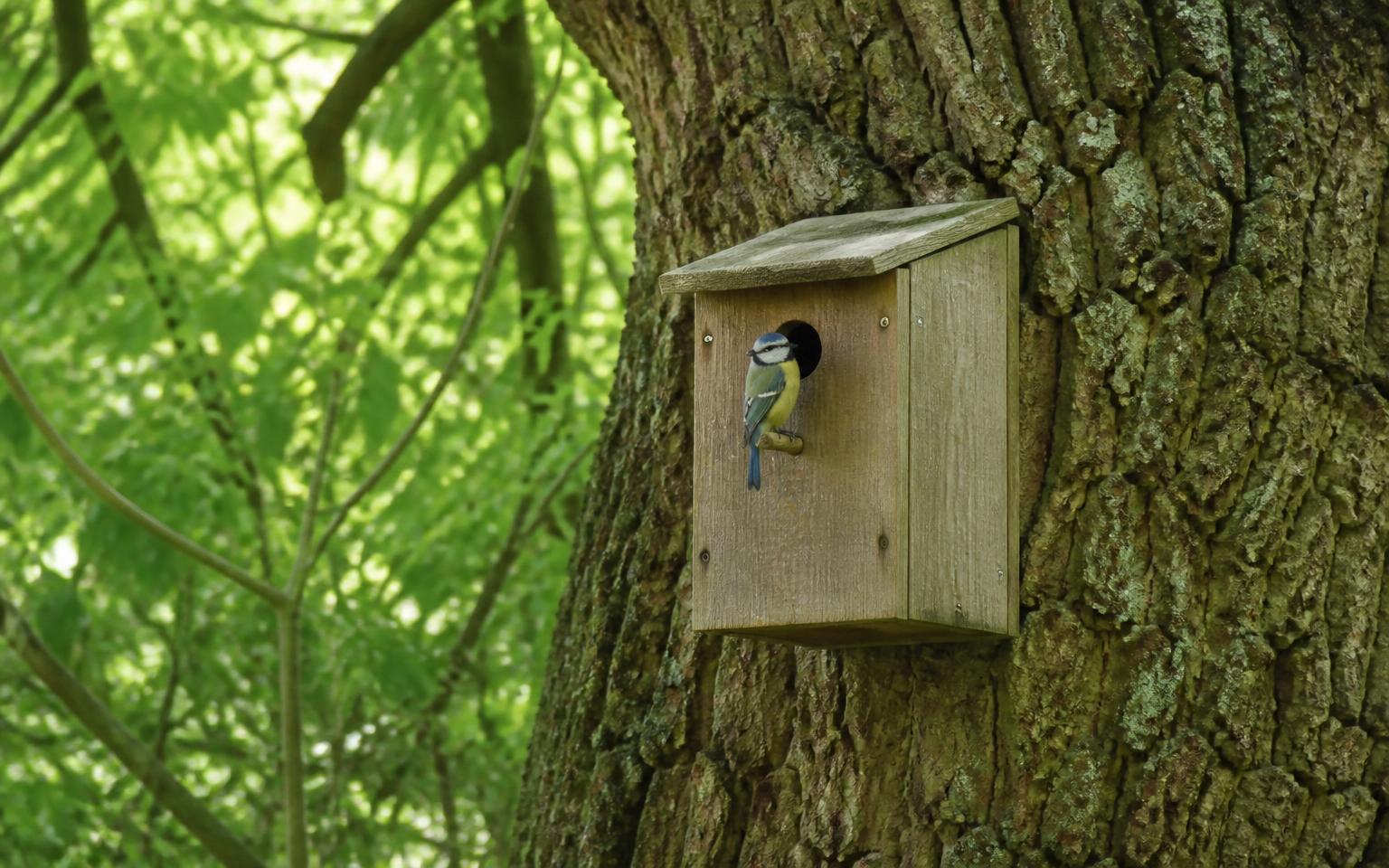
Safe nesting places for birds and small mammals, adapted to the needs of different species.
Discover this project€ 1.000 — excl. VAT per project and per project year