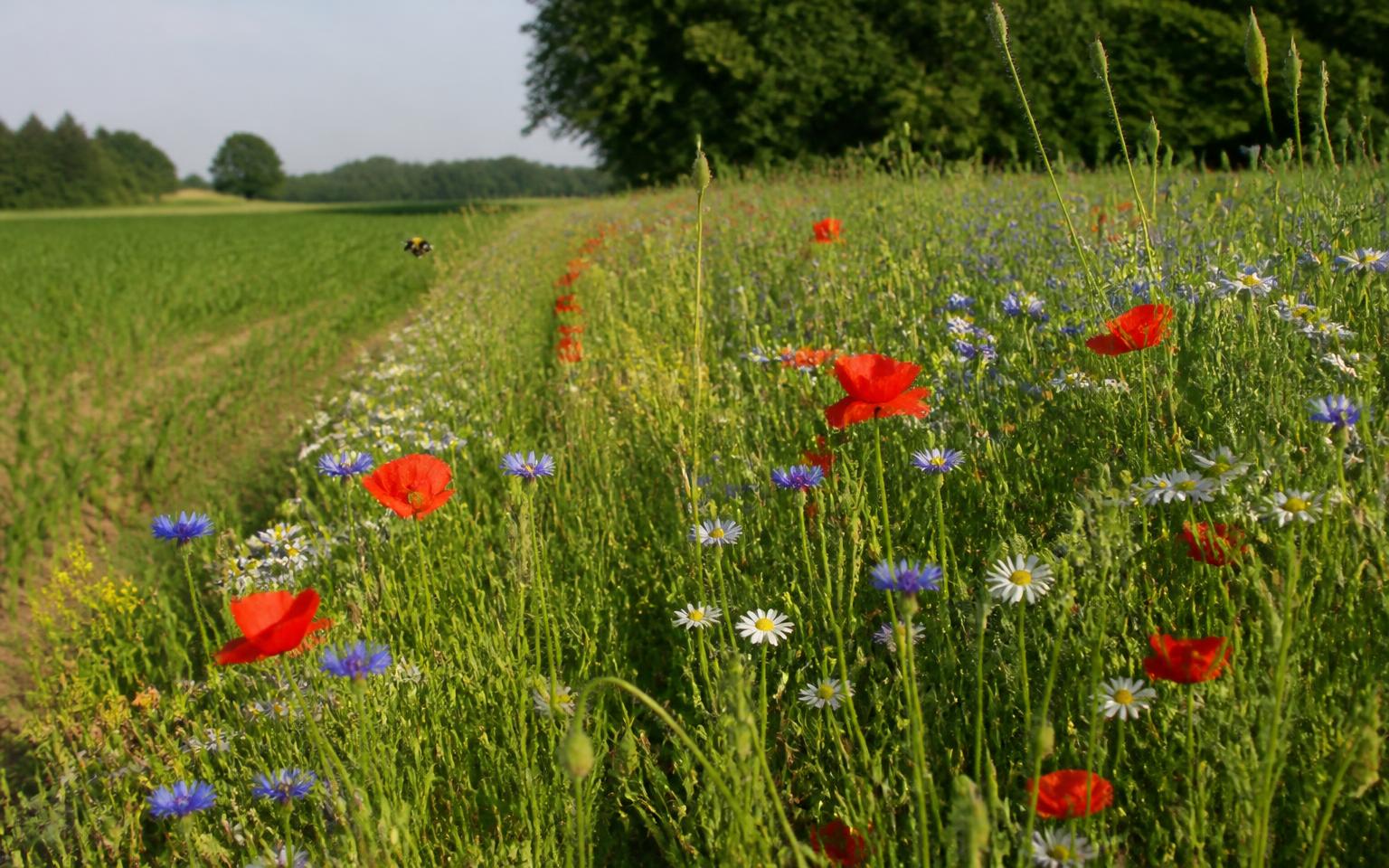
Flower meadows
More flowers, more pollinators, more colour — a food source for wild bees, bumblebees and butterflies.
Discover this projectOur projects
Help plant five quality high-stem fruit trees, with particular attention to old and regional varieties.
en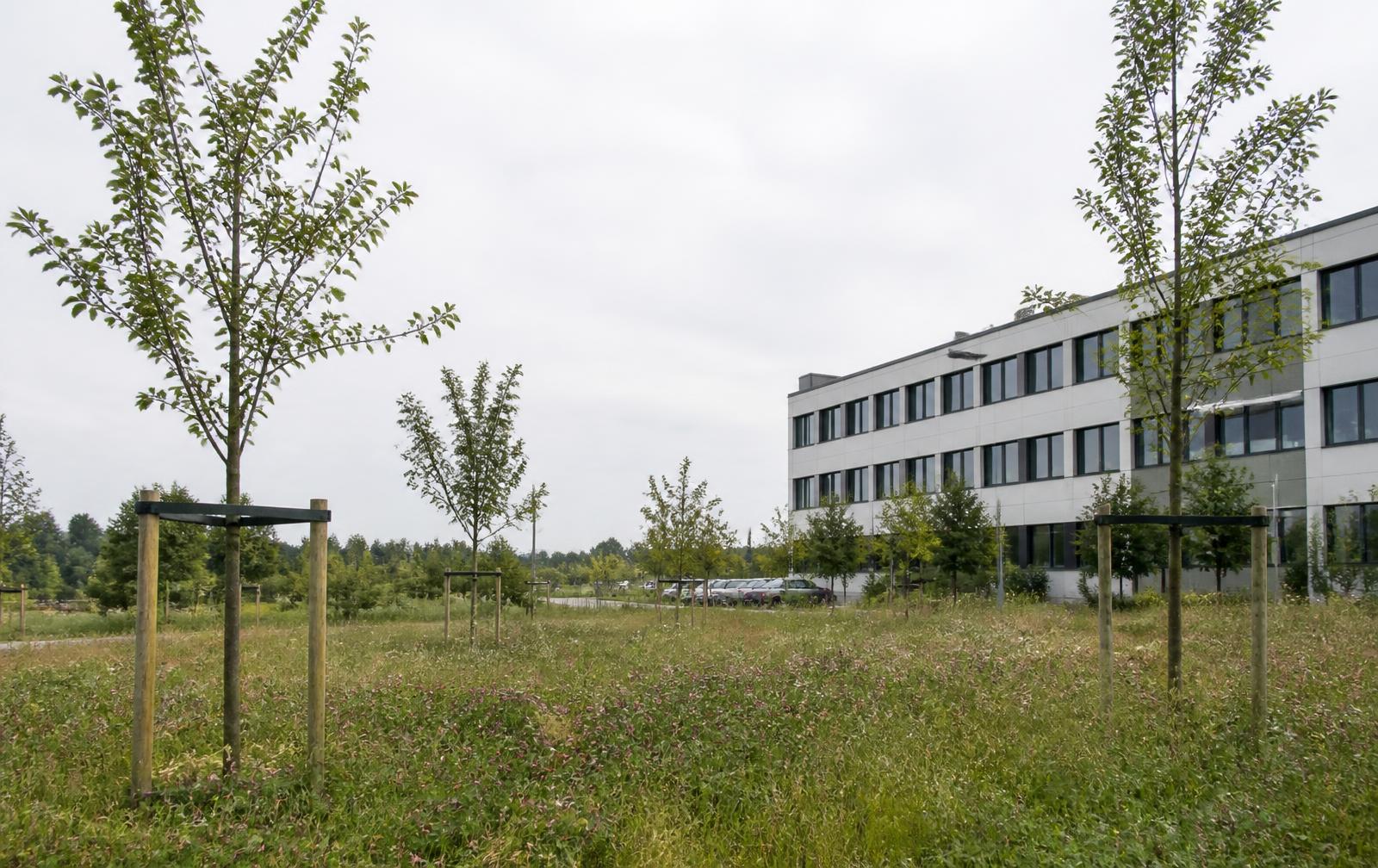
Many business parks contain green zones consisting mainly of closely mown grass. They look green, but often offer relatively little variation for nature.
KURBI wants to use part of that space differently.
By planting high-stem fruit trees and, where possible, managing the space beneath them in a biodiversity-friendly way, a simple grass zone can gradually turn into a small orchard: blossom in spring, shade and greenery in summer, fruit in autumn and ever more structure as the trees age.
We prefer not to plant five identical commercial fruit trees. KURBI wants to work with a varied selection of suitable fruit species and varieties, with particular attention to old and regional varieties.
In this way we connect nature, landscape, agricultural heritage and the people who work on the site every day.
One subscription of €1,000 excl. VAT makes the planting and first follow-up of 5 high-stem fruit trees possible.
A high-stem orchard consists of fruit trees whose crown develops relatively high above the ground. The trees get considerably more space than in intensive commercial fruit growing and can grow into large, characterful trees.
Traditional high-stem orchards were long part of the rural landscape. Around farms and villages stood apples, pears, cherries and plums that not only produced fruit but, together with the grassland beneath them, formed a distinctive landscape.
KURBI wants to apply exactly that principle again in places where space is available today. A business park need not consist solely of buildings, car parks and closely mown grass. Where enough open space is present, part of it can become orchard again.
Anyone whose only aim is to produce fruit as quickly and efficiently as possible would generally not choose a traditional high-stem orchard today. But that is not KURBI's objective either: this project is emphatically not intensive commercial fruit growing.
We want trees that get the room to grow big and old and that gradually become more and more part of the landscape.
A mature high stem has a substantial crown and a sturdy trunk. As it ages, the structure of the tree can become more complex. Rough bark, crevices and eventually sometimes cavities can create additional microhabitats, so the ecological meaning of the tree changes over time.
A high-stem orchard does not mature in a single season. It becomes more interesting every year.
One of the most spectacular moments in an orchard is the flowering.
Apples, pears, plums and cherries produce large numbers of flowers in spring, which can offer food to wild bees, bumblebees, hoverflies and other flower-visiting insects.
Combining different fruit species and varieties also creates variation in the orchard and can spread flowering somewhat across different periods.
We do not simply want to plant five trees. We want to think about what those five trees can mean together. The composition therefore takes into account the site, flowering period, pollination and suitability of the chosen varieties.
After pollination the flowers can grow into apples, pears, plums or cherries.
Part of that can of course be harvested by people. But fruit that stays on the tree or falls to the ground can also be used by birds, small mammals, insects and other organisms.
A fruit tree is therefore not a landscape element that only matters for a few weeks a year. Its function changes through the seasons: blossom in spring, then the leaf canopy, fruit in summer and autumn, and later leaves that fall to the ground and become part of the natural cycle.
Ideally a KURBI orchard consists of more than fruit trees on a classic company lawn.
The space under and between the trees is at least as interesting. That can mean, for example, that grass is mown less frequently, that flowering herbs get more opportunities and that management is tuned to local conditions.
Two structures can then develop above one another: the high-stem fruit trees above and a more varied grass and herb landscape below. That makes the orchard ecologically more interesting than five separate trees in permanently short grass.
Biodiversity is not only about wild plants and animals. The enormous variety of fruit varieties that people have selected and grown over generations is part of our agricultural heritage too.
Apples and pears are not simply "apple" and "pear": there are many varieties with different flavours, colours, growth forms, harvest moments and properties. Part of that diversity has become far less visible in the everyday commercial range.
KURBI therefore prefers to give old and regional fruit varieties a place in its high-stem orchards as well. That gives the orchard an additional meaning: we are not only planting trees for the future, we also help keep a piece of the past alive.
Diversity is therefore a starting point of the project.
Where possible, a standard module of five trees will consist of different suitable varieties. We aim to combine several varieties and take pollination possibilities into account. Depending on location and circumstances, apple, pear, plum, cherry or other suitable traditional fruit species can be considered.
The precise composition is not fixed identically in advance for every location. Soil, available space, local conditions, pollination and the suitability of the different varieties help determine what is planted. The right tree in the right place matters more than putting the same standard package everywhere.
Fruit trees can be interesting for birds too. The crowns offer structure and resting places, and insects living in and around the trees can in turn become food for birds. As trees age, their structures can become more varied.
Where useful, additional nesting provisions can be considered, but the tree itself remains the basis of the project.
Here too, KURBI cannot order or guarantee particular bird species. We create conditions from which different species can benefit.
The ecological value of an orchard depends partly on its surroundings. An isolated orchard in a heavily paved environment can be valuable, but an orchard connecting to other green structures can be even more interesting.
A high-stem orchard can therefore be combined excellently with other KURBI projects, for example:
In this way not only separate biodiversity measures arise, but a coherent small landscape can grow.
Business parks offer a particular opportunity. Many companies have land that is kept green for practical or aesthetic reasons but has no direct business function. Often that space is mown regularly, which costs maintenance while the ecological and landscape possibilities remain limited.
Part of it can sometimes be laid out differently without the company having to acquire additional land. A high-stem orchard also retains a relatively open character, which makes it more attractive than dense woodland for certain locations. And the result is literally on the company's doorstep.
The project is not limited to business parks, however: other suitable KURBI project locations are eligible as well.
That is a particular difference from a biodiversity project on a remote site: employees can see the orchard change every day.
In winter the trees are bare. In spring the blossom appears. Then the leaf canopy develops. And finally the fruit appears.
After a few years a company might organise a picking moment for staff, make fruit available at the office or simply invite employees to take a few apples or pears home. Biodiversity then becomes more than something written about in a sustainability report: it becomes visible, tangible and even tastable.
For this project too, KURBI opts for a simple and transparent project unit.
The contribution covers, among other things, the selection and purchase of suitable planting stock, the normal requirements for professional planting, transport and organisation, and the actual planting. Where needed, suitable tree stakes and ties can be used and attention is paid to giving the young trees a good start.
KURBI prefers five properly selected and planted trees over a larger number of trees where quality or aftercare must be economised.
A high-stem fruit tree project consists of more than the purchase price of a young tree. The tree must be selected, transported and planted, and depending on the location support or protection materials are needed. KURBI also wants room to choose quality planting stock and interesting varieties rather than buying only the cheapest trees available.
The project contribution of €1,000 excl. VAT should therefore be seen as financing a complete orchard module of five trees, not as the retail price of five fruit trees.
A company can decide for itself which scale suits its site and ambition. Several companies can also make a larger orchard possible together at a suitable location.
Five trees are the beginning. Fifty trees start to form a landscape.
High-stem fruit trees need space to develop — that is precisely one of their qualities.
The exact planting distance depends on the fruit species, variety, rootstock, soil and layout, so KURBI determines the concrete placement on the basis of the location concerned.
That also means not every unused green strip is suitable. Buildings, cables and pipes, roads, parking spaces, accessibility, shade, future business development and the eventual size of the trees must all be taken into account. A location is therefore always assessed before an orchard is planted.
Planting a high-stem orchard today does not produce a mature orchard tomorrow. The first years are precisely the period in which the trees must establish, root and grow. Only afterwards does the image we associate with traditional orchards gradually develop.
A company therefore helps bring about something whose meaning can increase year after year.
A well-planted high-stem orchard can contribute to:
The precise ecological results depend on location, management, weather and the development of the trees.
KURBI therefore guarantees no specific species, numbers of animals, fruit yields, CO₂ offsetting or other predetermined ecological results. We create space and conditions in which more nature can develop.
An orchard eventually produces fruit. On a company orchard the fruit can, for example, be made available to employees. A company can organise an annual picking moment. Part of it can possibly be processed or donated where there is sufficient harvest and a suitable local partner.
Part of the fruit may also remain part of the ecosystem. The project need not aim at maximum commercial yield. The orchard produces first of all landscape, biodiversity opportunities and experience. The fruit is a very welcome additional yield.
A KURBI orchard need not consist of fifty trees straight away. Five suitable high stems can already be the beginning of a completely different landscape.
Does your company have a little-used grass zone with enough available space? Then we are glad to look at whether it is suitable for a KURBI high-stem orchard. We assess not only how many trees physically fit on the site, but also which species and varieties belong there and how the space under and around the trees can be managed.
Companies without suitable land of their own can equally support an orchard project at another available KURBI project location.
The starting point is ultimately very simple. Today there are no fruit trees on a lawn. We plant five. Then five more.
The trees grow. Blossom appears. Insects visit the flowers. Under the trees the grass gets more room. Fruit appears. Birds use the trees. Employees walk between them. And as the years pass, it becomes ever harder to imagine that there was once only a mown company lawn here.
KURBI High-stem orchards — €1,000 excl. VAT — 5 quality high-stem fruit trees
A varied selection of suitable fruit species and varieties, with particular attention to old and regional varieties, professionally organised and planted, with normal first follow-up within the KURBI project.
The concrete execution and choice of varieties depend on, among other things, the suitability and availability of the location, soil, available space, pollination requirements, planting season and project capacity. Special earthworks, irrigation provisions, fencing, exceptional protection and long-term maintenance are not automatically included in the standard project contribution. Ecological effects, fruit production and the occurrence of particular species cannot be guaranteed.
This project reinforces other KURBI measures. Combining them increases the ecological value of the whole.
High-stem orchards combine nature, landscape and living agricultural heritage. Below are some reliable external sources for anyone who wants to explore old fruit varieties, biodiversity, planting and management further.
Background on the landscape, cultural-historical and ecological value of high-stem orchards.
Practical guide to planting, variety choice, pollination, pruning and management of high-stem fruit trees.
Information on high-stem fruit trees, old fruit varieties, landscape and genetic diversity.
Practical information and support on creating, restoring, managing and safeguarding high-stem orchards.
An initiative that helps use fruit from high-stem orchards locally and avoid waste.
External links open in a new tab. KURBI is not responsible for the content of external websites.
More flowers, more pollinators, more colour — a food source for wild bees, bumblebees and butterflies.
Discover this project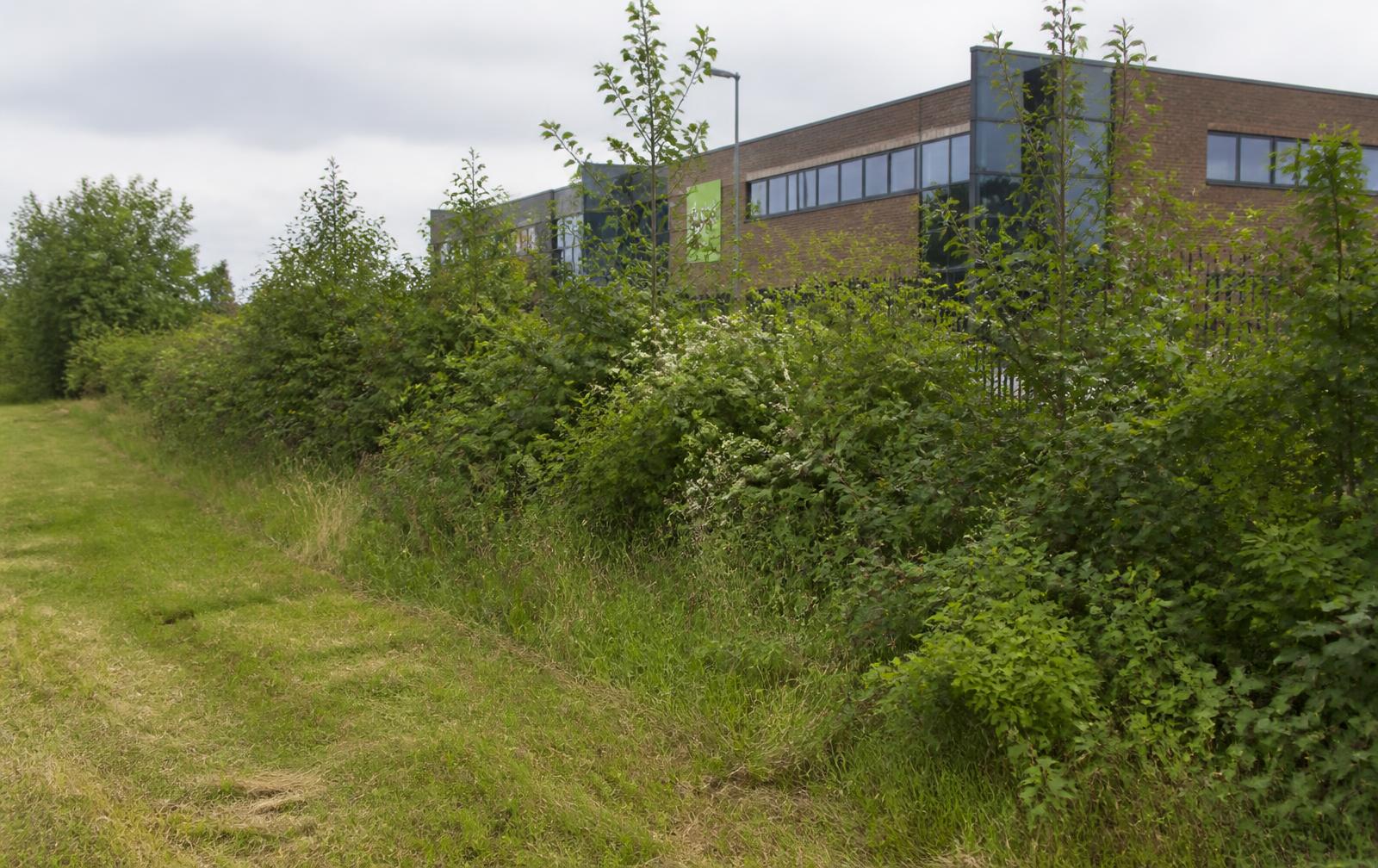
Make roughly 50 metres of new landscape element possible: a varied hedgerow of mainly native shrubs and trees.
Discover this project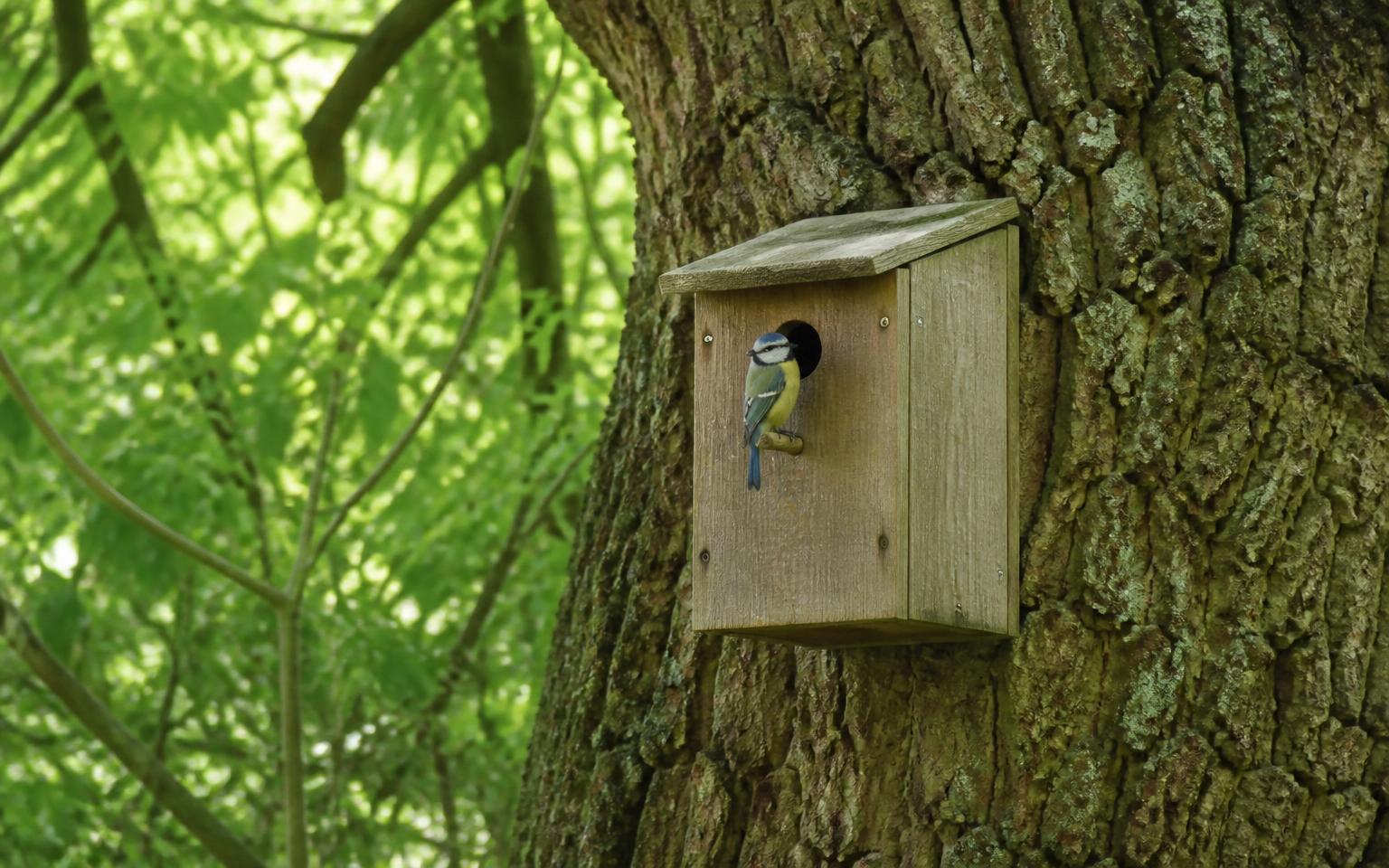
Safe nesting places for birds and small mammals, adapted to the needs of different species.
Discover this project€ 1.000 — excl. VAT per project and per project year