KURBI Płazów
KURBI focuses its current activities mainly on Bierbeek. Yet an important part of the story behind KURBI lies more than a thousand kilometres further, in <u>Płazów</u>, a
en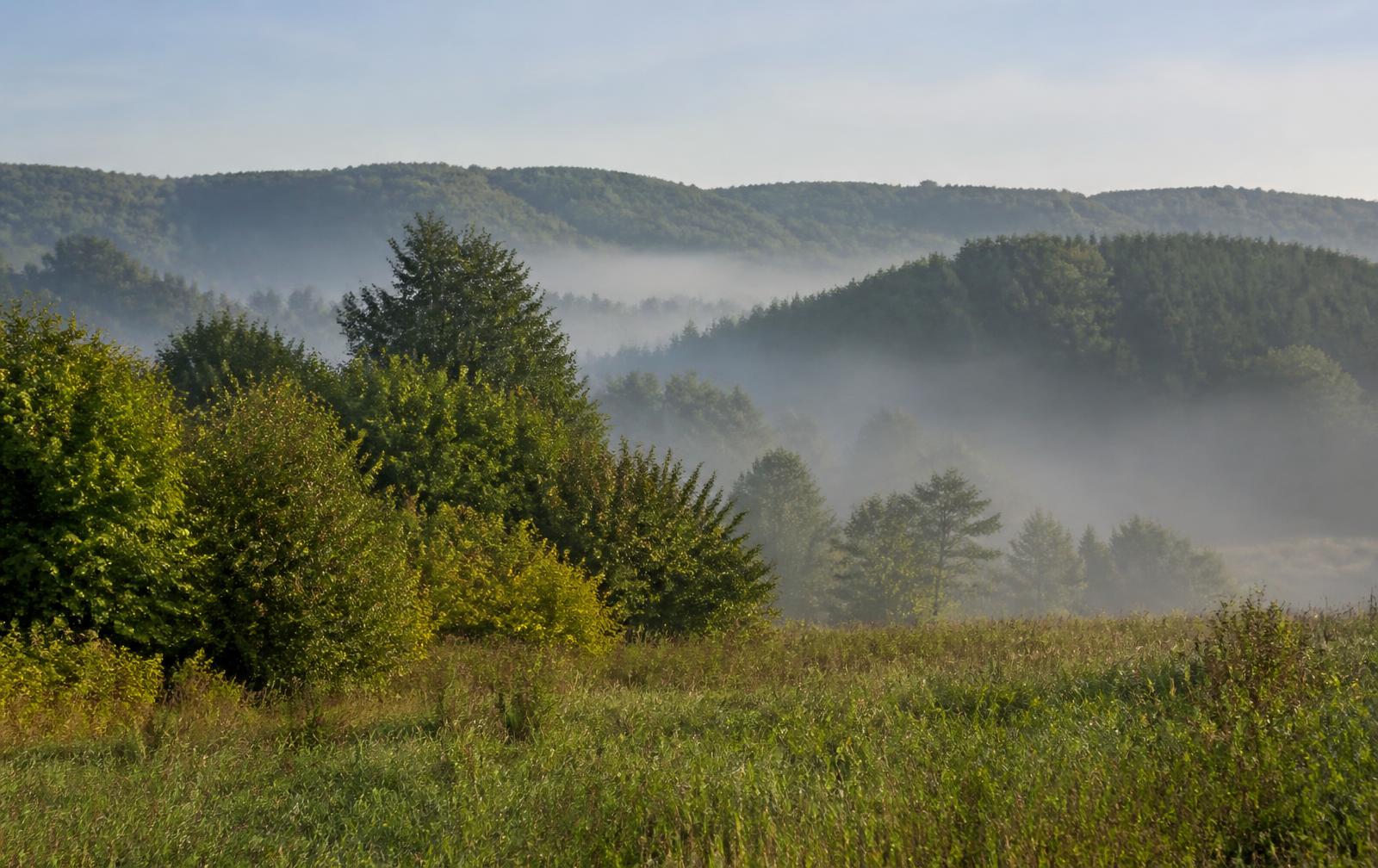
Introduction
A sister community where local ideas can become new opportunities
KURBI focuses its current activities mainly on Bierbeek. Yet an important part of the story behind KURBI lies more than a thousand kilometres further away, in <u>Płazów</u>, a village in the municipality of Narol in south-eastern Poland, on the edge of Roztocze and not far from the border with Ukraine.
One of KURBI's first concrete initiatives there was the creation of a wildflower meadow. The project was warmly welcomed by local residents and beekeepers. What began as a relatively simple biodiversity measure subsequently set something else in motion. Residents themselves began putting forward proposals for projects that, in their view, could make a difference for their village.
For KURBI, that is at least as valuable as the wildflower meadow itself. Local development need not, after all, begin with a grand master plan imposed from outside. People who live somewhere often know for themselves which buildings are at risk of disappearing, which stories are being lost, which places are being under-used, and which opportunities their surroundings offer.
KURBI therefore does not wish to determine what Płazów needs. We want to listen to ideas that arise locally and then investigate whether they can be realised when three elements come together: a locally supported project idea, reliable people or organisations able to carry it out on the ground, and sufficient financing to realise it professionally and sustainably.
In that sense, we regard Płazów as a <u>sister community of KURBI-Bierbeek</u>. This does not refer to a formal twinning between the municipalities. It concerns a special bond between two rural communities in which nature, agriculture, landscape and local identity play an important role, and in which relatively targeted projects can make a visible difference.
A village that was once a town
Anyone visiting Płazów today sees a small Polish village. Anyone who looks a little further discovers a much richer past.
Płazów was founded as a town in 1614 under Magdeburg law, pursuant to a privilege granted by King Sigismund III Vasa. Its founder was Jan Płaza of Mstyczów, among others starosta of Lubaczów and Niepołomice. Płazów also bore the name Lubela, after the watercourse along which the settlement arose. Although it never grew into a large town, it did develop as a local centre for crafts and trade. As late as 1785, the Austrian authorities still counted Płazów among the small towns. The precise date on which it subsequently lost its urban status cannot be established with certainty from local historical sources. Until 1954, however, Płazów remained the centre of its own municipality.
That past still lives on in the spatial structure today. The former market square and the network of narrow streets recall Płazów's urban origins. In 2014, the town officially celebrated the four-hundredth anniversary of its founding. On that occasion, local history was once again brought to attention, and a monograph outlining the history of Płazów between 1614 and 2014 was published.
This is relevant to the village's future. Płazów does not need to invent a new identity. It already has a story of its own that can once again be made visible.
A distinctive tradition found nowhere else in the same form
One of the most striking examples is the <u>drzeworyt płazowski</u>, the traditional woodcut printing technique from Płazów.
In this technique, an image is carved into a wooden block, ink is then applied to the remaining relief, and the image is printed onto paper. Historically, religious images were among those produced, which were then sold at markets, pilgrimages and fairs.
The official tourism organisation of Podkarpackie describes the Płazów collection of woodcut blocks as the largest collection of engraved blocks originating from a single place in Poland. Today, Płazów once again has a Drzeworytnia, where this almost-vanished craft tradition is practised and shown to visitors.
That is more than a tourist curiosity. It proves that Płazów already has experience with a principle that is also central to several of KURBI's new project ideas: heritage is best protected when people once again take an interest in it and when it is once again given a function.
Płazów is not isolated
Płazów does not need to create a visitor market from scratch in geographical terms either. It lies within Roztocze, a distinctive natural and cultural landscape stretching across the Polish-Ukrainian border region. The area is characterised by forests, agricultural landscapes, hills, stream valleys, historic villages and a remarkably rich cultural heritage.
In 2019, the cross-border Roztocze Biosphere Reserve was included in UNESCO's worldwide network of biosphere reserves. According to the Roztocze National Park, the entire cross-border area covers approximately 371,902 hectares in Poland and Ukraine. The objective is explicitly not nature conservation alone: UNESCO's biosphere concept seeks to link biodiversity protection with sustainable socio-economic development and with the cultural identity of local communities.
This is remarkably relevant to the ideas from Płazów. The premise of the proposed projects is precisely that nature, heritage and economic development need not work against each other, but can in fact reinforce one another.
The Polish government moreover explicitly presents Roztocze as a destination for active and cultural recreation. The region has more than a hundred marked hiking and cycling routes, and includes, among others, the Centralny Szlak Rowerowy Roztocza and part of the Green Velo route.
An extensive cycling network already exists within the municipality of Narol (to which Płazów currently belongs) as well. Of interest to Płazów is that one of the six official municipal cycling routes, a route of approximately 30 kilometres, runs directly through Płazów.
The municipality is moreover continuing to invest in that tourism infrastructure. The official spatial planning documents for 2025 and 2026 mention, among other things, a new singletrack, various facilities for cyclists, an observation tower, a walking promenade along the Tanew, recreational infrastructure and additional short-term accommodation. This indicates that the ideas from Płazów are not arising in a region where tourism is stagnant, but in an environment in which further investment in recreation and stay-over tourism is currently actually being made.
A region facing demographic challenges at the same time
That landscape richness does not alter the fact that Płazów and the wider region face problems familiar to many rural parts of Europe.
Young people move to larger cities for education and work. Traditional economic activities do not always offer sufficient future prospects. Historic buildings lose their original function, and facilities become harder to maintain as the population declines.
That makes the challenge more interesting than a simple story of decline. A rural community also possesses assets that a city can hardly reproduce: space, quiet, landscape, local agricultural knowledge, historic buildings, crafts, nature and a recognisable identity.
The Polish government, too, today explicitly emphasises that rural tourism and agrotourism need not be mere additions to agriculture, but can serve as instruments for entrepreneurship and economic diversification in rural areas.
The question for Płazów is therefore not how the village can become more like a city. The more interesting question is: how can Płazów generate more economic and social value from precisely those characteristics that make the village special?
Four concrete project ideas have emerged from that line of thinking:
1. PROJECT PASIEKI
Saving historic wooden houses by giving them a new use
The concept starts from a visible problem. In rural areas, there are still old wooden houses that form part of the traditional landscape but are not necessarily individually protected as monuments. When such houses fall vacant and renovation becomes economically unattractive, demolition looms.
PROJECT PASIEKI proposes a different approach. Valuable pre-war wooden houses would be identified and, where preservation at their original location is not realistic, carefully dismantled and rebuilt at a suitable location in Płazów. There, they would be restored and given a second life as small-scale accommodation for agrotourism.
The original concept is based on eight historic houses. However, the ambition goes further than eight holiday cottages. PROJECT PASIEKI could become a place where visitors become acquainted at the same time with traditional architecture, ecological farming, biodiversity, forest management, beekeeping, local produce and local crafts. The original project proposal expressly envisages the involvement of farmers, beekeepers, craftspeople and people with forestry knowledge.
In this way, PROJECT PASIEKI can distinguish itself from a classic skansen or open-air museum. A historic house would then not merely be preserved for viewing. It would once again be given an economic function.
That matters because a building that generates income also once again has a reason to be maintained. Heritage as economic infrastructure.
PROJECT PASIEKI could therefore generate several effects at once. Historic architecture is preserved. Local craftspeople can be engaged for restoration and maintenance. Visitors have a reason to stay overnight in Płazów. Farmers, beekeepers and producers can offer activities and products. Restaurants, shops and other tourism businesses in the area can benefit from additional visitors.
The existing cycling routes and the tourism positioning of Roztocze make that concept more attractive still. Płazów does not, after all, sit on a tourism island; a stay can be combined with cycling, walking, nature, Narol, the Drzeworytnia and other attractions in the area.
The plan also provides for solar panels and battery storage. In further development, that idea should be considered more broadly. Insulation, energy-efficient heating, rainwater use and careful wastewater management could be examined as well, always with respect for the character of the historic buildings.
In this way, PROJECT PASIEKI could ultimately also become a demonstration project addressing a topical question: how can historic rural buildings be given a second life without losing their identity?
The total concept budget amounts to approximately €325,000. The concept has the advantage that it can be developed in phases. A first house, for example, could be restored as a pilot project before immediately tackling all eight houses.
That reduces the risk and makes it possible to first test in practice how much interest exists in the concept.
2. A POLISH NATURE AND SAFARI PARK
Not an exotic safari, but an encounter with Polish natural heritage
KURBI would deliberately give that concept a different meaning than a traditional zoo with a collection of exotic species. Płazów need not imitate Africa. Poland itself has animals with an exceptionally strong nature and heritage story. The project could therefore first and foremost be developed around two iconic animals: the <u>konik polski</u>, the characteristic Polish horse, and the <u>żubr</u>, the European bison.
The result could be a kind of Polish safari: an extensive landscaped park in which visitors observe animals while at the same time becoming acquainted with the history of the Polish landscape, traditional breeds, biodiversity and nature conservation.
The konik polski: a distinctive Polish breed with a direct link to Roztocze
The konik polski is a small, robust horse breed, usually with a mouse-grey coat, a dark dorsal stripe and primitive physical characteristics.
The name konik polski was introduced into the hippological literature in 1925 by Professor Tadeusz Vetulani. Historically, the breed was strongly associated with research into the extinct European wild horse and with the so-called Biłgoraj horses.
Some scientific caution is warranted when communicating about this. The konik polski is traditionally closely linked to the tarpan, but it is better not to present the breed, without nuance, as a directly unaltered descendant of the wild tarpan. What is undisputed, however, is the breed's special Polish and regional significance.
The nearby Roztocze National Park has the konik polski as its emblematic animal. The park's conservation breeding programme began in 1982 with four mares and one stallion. The initial 44-hectare reserve was later extended to approximately 234 hectares, and a centre for stable-based conservation breeding was additionally established in Florianka.
Furthermore, the konik polski is today officially included in the Polish programme for the conservation of the genetic resources of farm animals. In March 2026, the current conservation programme was again formally established by the Polish National Research Institute of Animal Production.
This makes the animal particularly suited to an educational project in Płazów.
The konik polski is at once an attractive animal, living agricultural heritage, and an example of the efforts made to preserve genetic diversity among traditional breeds.
A visitor therefore does not simply see a horse. They can discover why old breeds are protected, why genetic diversity matters, and how robust grazers can be used within extensive landscape management.
The żubr: one of the greatest successes of European species protection
The second key species would be the żubr, or European bison (Bison bonasus). It is the largest surviving wild land mammal in Europe and one of the best-known symbols of Polish nature.
Its history is exceptional. After the First World War, the last free-living żubr disappeared from Białowieża. The recovery of the species subsequently had to begin with a very small group of animals that had survived in captivity. From the 1920s onwards, an international recovery programme was built up, and in 1952 the reintroduction of animals into the wild in Białowieża began once more. Other areas followed later, including the Bieszczady mountains.
The result is one of the most visible European examples of successful nature restoration.
But that success does not mean the species no longer needs protection. The żubr is under strict species protection in Poland, and the Polish nature conservation authorities continue to work on a national long-term strategy for management, health, genetics, new populations, public acceptance and the mitigation of conflicts between humans and żubr.
The żubr can therefore tell a particularly powerful story in Płazów. Above all: “See what decades of sustained nature conservation can achieve.”
From safari park to educational nature park
Further research makes clear that KURBI must use the term safari park with caution. When animals are permanently exhibited to the public, the Polish rules on zoos and protected species may become relevant, depending on the specific arrangements. Formal zoo status requires authorisation from the Polish Generalna Dyrekcja Ochrony Środowiska and entails obligations relating, among other things, to scientific research, education, ex-situ conservation, housing in accordance with animals' biological needs, and breeding documentation. Separate protection and veterinary requirements also apply to the żubr.
The project should therefore not begin with the question of how many animals can be acquired. The first question must be: which legal, ecological and economic model is responsible?
Perhaps that leads to a formal nature park with an educational conservation function. Perhaps cooperation with an existing żubr organisation or breeding institution is more suitable. Perhaps a smaller-scale visitor and education centre centred on a few carefully kept animals proves the best solution.
KURBI does not wish to predetermine that outcome. Animal welfare, nature conservation and legal feasibility must take precedence over tourist appeal.
A potential visitor magnet for other activities
Where feasible, the nature park could be economically interesting above all because it reinforces other projects. Anyone coming to Płazów to see a żubr or konik polski could also visit the Drzeworytnia, stay overnight, eat locally or go on a cycling trip. As a result, the economic value of the park need not come solely from admission tickets. It could be a visitor magnet from which several local activities benefit.
3. THE HISTORIC INN ON MICKIEWICZ STREET
Giving a monument a function once again
The third proposal concerns the historic former <u>karczma</u> (inn) on Mickiewicz Street in Płazów.
This building deserves particular attention because the official Polish heritage database provides remarkably clear information about it.
The National Heritage Institute dates the current structure to the first half of the nineteenth century, but notes that the building probably has an eighteenth-century origin. Despite alterations in the 1950s, it has, according to the heritage inventory, retained its original volume and characteristic architectural form. The institute explicitly describes the building as a material witness to the history of the former town of Płazów.
It was a public building in a small trading settlement. A traditional karczma was a place where residents, travellers and traders met one another, exchanged information, ate, drank and did business.
There is therefore a fitting historical continuity in the idea of giving precisely this building a social function once again.
The right destination should not be imposed from outside. A local consultation with residents, associations and entrepreneurs would therefore be a logical first project phase. This is, moreover, not out of keeping with the local governance culture: the municipality of Narol demonstrably organises public consultations, including consultations specifically involving residents of Płazów.
Perhaps it could become a village hall. Perhaps a combination of meeting space, tourist information point, small exhibition space, café, local produce outlet and workshop space. Perhaps the Drzeworytnia could organise activities there. Perhaps cyclists passing through Płazów could stop there. Perhaps local associations could meet there and small cultural events could take place.
Heritage funding genuinely exists
Financially, too, this project need not necessarily depend exclusively on private sponsorship. Poland has a national Ochrona zabytków (Monument Protection) programme for the conservation, restoration and public accessibility of registered monuments. For 2026, the total budget of that programme ultimately exceeded 200 million PLN. Under certain conditions, the programme is open to, among others, owners, local authorities, cultural institutions, foundations and other holders of registered monuments.
That does not, of course, mean that the inn in Płazów will automatically receive a subsidy. It does mean that a private contribution could potentially function as leverage within a broader financing structure in which Polish public heritage funds are also explored. That is precisely the kind of combination that KURBI finds interesting for larger Płazów projects.
Płazów has already proven that heritage can live again
The Drzeworytnia provides a local example of this. An almost-vanished craft was not merely archived. It was practised once again, displayed and made accessible to visitors. The old inn can be approached from the same philosophy: not preserved because it is old, but preserved by once again creating a reason for people to use and value it.
4. THE PŁAZÓW FESTIVAL
Music, art and encounter in a border region with a difficult history
This concerns a cultural festival giving a place to Polish, Ukrainian and Jewish traditions.
The project proposal seeks to use music and art to give visibility to the heritage of communities that historically lived in this border region, and to create space for encounter between people whose mutual relations have been deeply damaged by twentieth-century history.
That premise is powerful, but requires great historical care. The area around Płazów and Narol was, for centuries, culturally and religiously diverse. The Jewish presence in the region, too, goes back several centuries. For Narol, for example, the POLIN-supported Virtual Shtetl already documents Jewish institutions at the beginning of the seventeenth century.
The twentieth century destroyed a large part of that society. In 1940, the German occupier established a forced labour camp for Jews in Płazów as part of the so-called Plan Otto. Academic research explicitly identifies Płazów as one of the locations in this camp system, alongside, among others, Bełżec, Cieszanów, Dzików and Lipsko. The prisoners were used under particularly harsh conditions on infrastructure works along the then German-Soviet demarcation line.
Polish-Ukrainian relations in the wider border region were also marked, during and after the Second World War, by extreme violence, nationalism and forced population displacements.
A future festival must therefore not simplify this history into a single story of perpetrators and victims, nor suggest that a cultural event can “resolve” historical trauma.
The ambition can be both more modest and stronger at the same time: to remember, to acknowledge, and to meet once again.
Neither a historical tribunal nor oblivion
A Polish-Ukrainian-Jewish festival must not become a historical tribunal in festival form. But nor should it filter out difficult history simply because it is uncomfortable.
Music and art can do what politics often cannot do as well: create a shared space in which people first stand alongside one another simply as human beings. A Polish folk melody, a Ukrainian song, a klezmer concert, an exhibition, a regional meal or a family's story can open a conversation that might otherwise never take place.
The festival could therefore combine concerts with art, workshops, local gastronomy, historical walks, testimonies, activities for young people and moments of remembrance.
The emphasis need not be on mass tourism. A smaller but substantively credible international event could ultimately be far more valuable for Płazów.
The cross-border idea aligns with what is happening in the region today
An important new finding from the research is that cross-border cooperation between Poland and Ukraine is currently active European policy. The project fits substantively within a much broader European movement concerning cross-border cooperation, culture, Ukraine and the restoration of trust between communities.
Start small and build credibility
A small pilot edition could be a sensible approach. One day or weekend with a few carefully chosen artists, a historical component, local gastronomy and one or two international partners could demonstrate whether sufficient local and external interest exists. If that succeeds, the festival could then grow organically.
Why Płazów?
Perhaps, in the end, it is precisely the scale of Płazów that is its greatest asset. A large company investing €25,000 in a multi-million-euro project in a big city makes a contribution, but that contribution easily disappears into the whole.
In a small community, the same amount can make the difference between an idea that remains on paper for years and a first project phase that is actually carried out.
Interested in one of the ideas from Płazów?
The four proposals are currently at various stages of development. They do not constitute an offer of a financial product, and KURBI does not guarantee that every project will be carried out. They constitute an invitation to explore possibilities. We also warmly invite anyone able to offer relevant expertise, materials, services or contacts to enter into discussion with us.
A wildflower meadow was the beginning
KURBI did not begin in Płazów with a grand development plan. It began with a wildflower meadow. The wildflower meadow led to conversations. The conversations led to ideas. And the ideas brought other people to the table once again.
Perhaps that is, ultimately, the most interesting lesson from Płazów.
Local development does not necessarily begin with a large budget. It can begin when someone takes a first visible initiative, when residents respond to it, and when people are then found who are willing to make knowledge, time or resources available for a next step.
Not every idea will ultimately be carried out. Nor does it need to be. But every good local idea deserves the chance to be seriously explored. That is the role KURBI wishes to take up in Płazów: connecting local ideas with the people, expertise and financing needed to turn them into reality.
Become a KURBI partner
€ 1.000 — excl. VAT per project and per project year