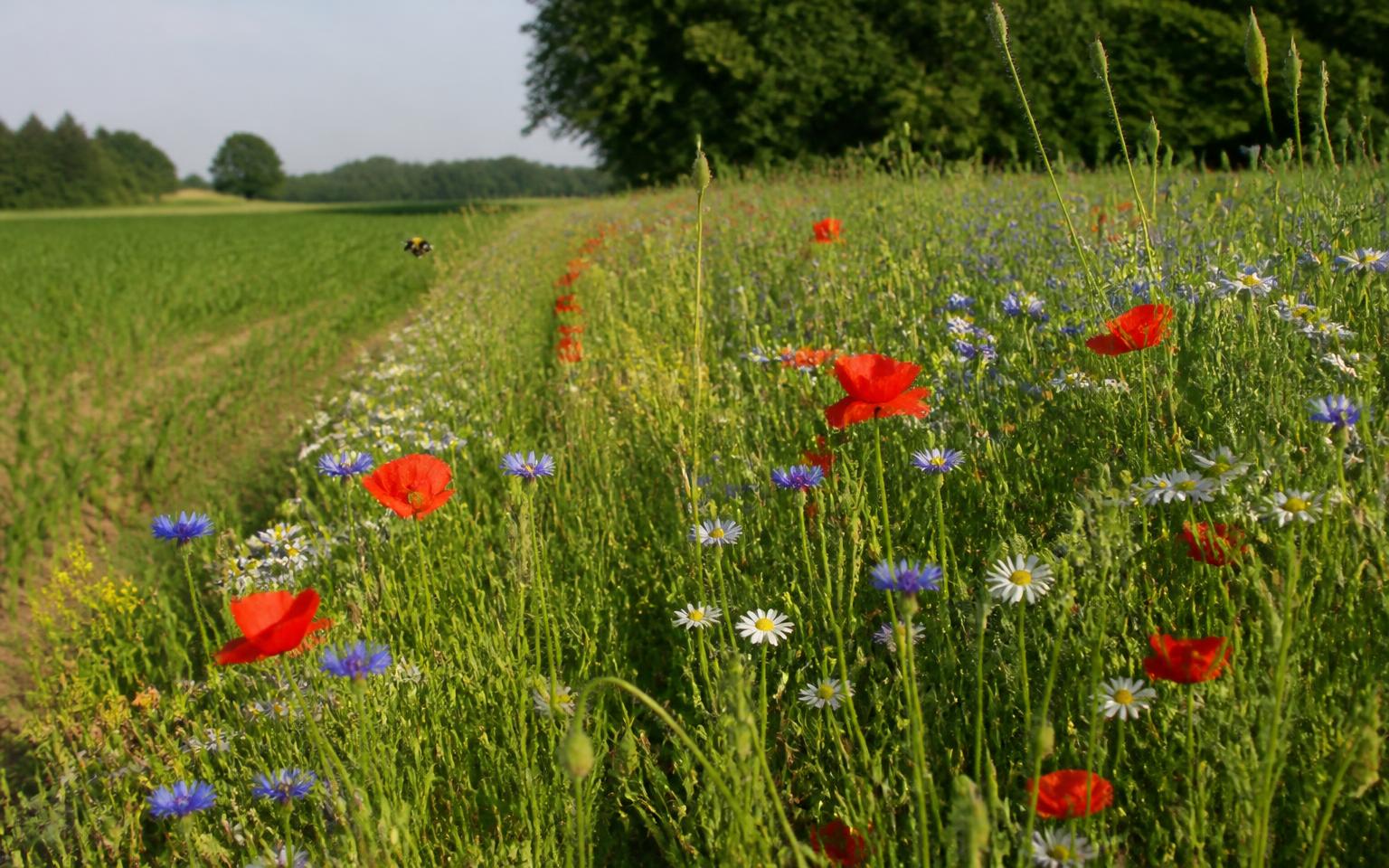
Flower meadows
More flowers, more pollinators, more colour — a food source for wild bees, bumblebees and butterflies.
Discover this projectOur projects
A small structure with large ecological value: shelter and nesting space for many insects.
en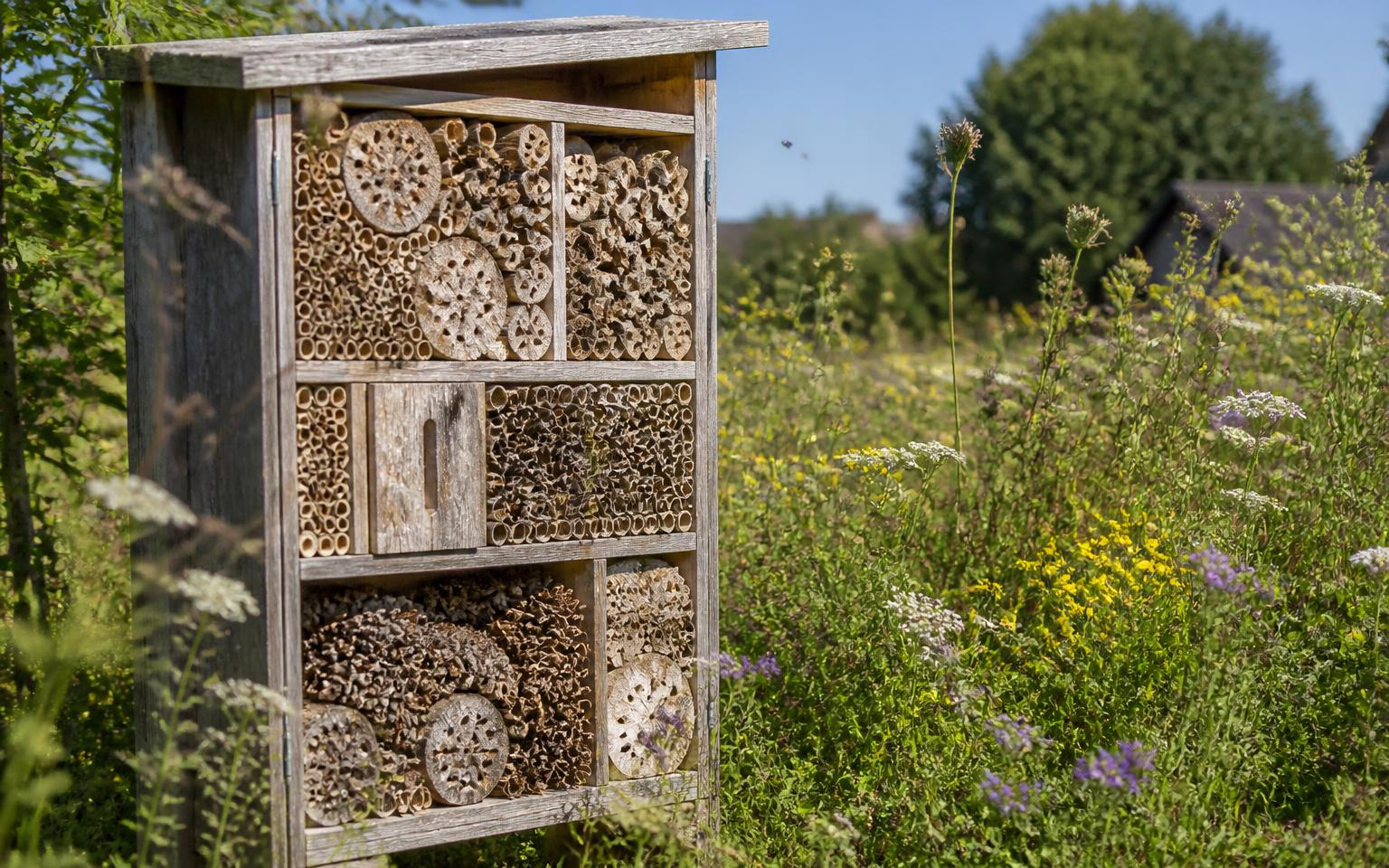
Insects are present everywhere, yet often go unnoticed. Still, they perform functions without which a landscape can barely function.
Bees, hoverflies and butterflies pollinate plants. Ladybirds, lacewings, earwigs and solitary wasps help control populations of aphids, caterpillars and other small creatures. Beetles and other decomposers contribute to the breakdown of dead plant material. Insects also form an indispensable food source for birds, bats, amphibians and small mammals.
An insect hotel can offer certain species additional nesting and shelter opportunities. It does not replace a full-fledged habitat, but it can form a useful link within a wider landscape featuring wildflower meadows, wild corners, dead wood, open soil, water and adapted mowing regimes.
That is why KURBI provides for the production and installation of large, professionally built insect hotels at suitable local sites.
In a natural landscape, insects find nesting places in dead plant stems, old trees, beetle tunnels, crevices, dead wood, loam walls and bare soil.
Many of these structures disappear when land is maintained very intensively:
dead plants are removed immediately;
old or dead trees disappear;
verges and grasslands are mown frequently;
bare soil is covered or paved over;
wood and branches are completely cleared away;
flowers are available only for a short period;
pesticides reduce both insects and their food sources.
The municipality of Bierbeek also points out that wild corners, flowering hedges, bee-friendly plants and avoiding chemical pesticides are important for solitary bees and other insects. The municipality likewise recommends the use of bee hotels, but rightly places that measure within a broader, nature-rich habitat.
An insect hotel is a human-made structure bringing together various nesting and shelter structures.
Depending on the intended residents, the hotel can consist of, among other things, hollow stems of reed or bamboo; solid wooden blocks with smoothly drilled nesting tunnels; loam or clay; dead wood; bark; branches; pine cones; straw or wood wool; and narrow, dry crevices.
Each structure has a different function. A mason bee, for example, uses a hollow tunnel, while an earwig prefers a dark hiding place. The Flemish Bee Institute (Vlaams Bijeninstituut) emphasises that a bee hotel is primarily intended as a nesting site for solitary bees, such as mason bees, leafcutter bees and yellow-faced bees.
A good insect hotel is therefore not a random collection of materials. The dimensions, depth, finish, orientation and protection from rain all determine whether insects can actually make use of the structure.
The name "insect hotel" may give the impression that all insects benefit from it. That is not the case.
Many wild bees dig their nests in the soil. Other species live in old trees, under leaves, in plant roots or in specific vegetation. Butterflies generally do not use a hotel as a permanent residence. Bumblebees mostly build nests in underground cavities, abandoned mouse nests, tussocks of grass or other sheltered spaces.
An insect hotel mainly helps species that naturally make use of existing tunnels, hollow stems, crevices or small dry spaces.
That distinction is important. The 2025 Flemish Red List lists 340 species of wild bees. Of these, 35 species are regionally extinct, 14 critically endangered, 37 endangered and 50 vulnerable. Bumblebees, mining bees and furrow bees in particular have declined sharply. Many of these species do not nest in classic insect hotels, but in the soil or in specific natural biotopes. Species that nest above ground generally fare better than those that nest below ground.
KURBI will therefore never present insect hotels as the solution to insect decline. They are one targeted measure within a much broader biodiversity management approach.
Mason bees are among the best-known residents of bee hotels.
They use existing hollow tunnels, for example in reed stems or drilled wooden blocks. The female brings pollen and nectar inside, lays an egg on top and then seals each brood cell with a wall of mud or loam. This creates a series of separate chambers within a single tunnel.
Mason bees are important pollinators. They fly early in spring, when fruit trees such as apple, pear, cherry and plum are in bloom. Through their active flower visits, they can play a valuable role in gardens, orchards and agricultural landscapes.
The red mason bee and the horned mason bee are among the species that often use artificial nesting tunnels. However, their presence is never guaranteed: they only settle when sufficient food, suitable building material and a favourable microclimate are also present.
Leafcutter bees line their nest cells with pieces of leaf. If you look closely, you can sometimes find almost perfectly round or oval cut-outs in the leaves of roses or other plants.
The female carries the cut leaf pieces to an existing tunnel and uses them to line and seal her brood cells.
Leafcutter bees are also pollinators. They visit various wildflowers and garden plants, thereby contributing to plant reproduction and the formation of seeds and fruit.
Yellow-faced bees are small, usually dark solitary bees with pale or yellow markings on the face.
They do not collect pollen on conspicuous hairs like many other bees. Instead, they carry nectar and pollen in their crop. In the nest, they apply a thin, cellophane-like lining to coat the brood cell.
Yellow-faced bees visit small, open flowers and contribute to the pollination of various wild plant species.
Small carpenter bees (tronkenbijen) are tiny solitary bees that like to use narrow tunnels in dead wood or suitable nesting tubes.
They mainly collect pollen from composites: plants with flower heads such as ox-eye daisy, knapweed and related species. As a result, they are strongly dependent on an environment where the right flowers are present.
They pollinate various wild plants and perfectly illustrate why an insect hotel should never be considered in isolation from its surroundings.
A hotel without suitable flowers nearby is of little value to a small carpenter bee.
Not every wasp lives in a large colony and defends a paper nest.
Many wasp species live solitarily. The female builds her own nest and cares for her own offspring. Various solitary wasps use existing tunnels in wood or hollow plant stems and can therefore also nest in an insect hotel.
Depending on the species, they collect, for example, aphids; caterpillars; beetle larvae; weevils; spiders; or other small invertebrates. This prey is placed as food for the larvae in the nest cells.
Solitary wasps contribute to natural pest control. They help limit populations of other small creatures while also forming part of the food web themselves.
They generally behave much less defensively than socially living wasps, because they have no large colony or shared nest to defend.
Wasps and European hornets are beneficial animals, and extermination is not automatically the best choice. Solitary bees and bumblebees are likewise beneficial insects.
Ladybirds generally do not use an insect hotel as a breeding place in the way solitary bees do. However, they can use dry crevices, wood wool, leaves or other sheltered spaces to hide or overwinter.
Many species of ladybird and their larvae eat aphids. Some species also feed on scale insects, mites or fungi. That makes them among the best-known natural allies of gardeners and farmers.
An insect hotel alone will not create a ladybird population, however. Sufficient prey, vegetation and a low-pesticide environment are also necessary.
Adult lacewings are recognisable by their finely veined, transparent wings. Some species can use dry, sheltered spaces to overwinter.
The larvae in particular are especially useful. They eat, among other things, aphids; young caterpillars; thrips; mites; and the eggs of other insects.
For this reason, lacewing larvae are also sometimes deliberately deployed in biological crop protection.
A dedicated compartment in an insect hotel can offer shelter, but here too, a suitable landscape and sufficient food are decisive.
Earwigs seek dark, narrow hiding places during the day. Compartments with straw, wood wool or small crevices can be used by them as a resting place.
Earwigs are omnivores. They eat dead plant material, but also aphids, insect eggs and small larvae. Especially in fruit growing, they can therefore make a useful contribution to natural pest control.
They can sometimes also eat soft fruit or plant tissue. Their role is therefore nuanced: they are not purely "good" or "harmful" animals, but part of an ecosystem.
An insect hotel offers, at most, living space. The surroundings must also provide food, water, building material and safety. That is why KURBI preferably combines insect hotels with species-rich wildflower meadows; flowering hedges and shrubs; wild natural corners; dead plant stems; dead wood; open and undisturbed soil; ponds or other water sources; and management without unnecessary use of pesticides.
A good insect hotel is not a decorative object placed somewhere in the landscape. It is a carefully designed nesting facility within an environment that already offers food and other necessary living conditions.
According to the 2025 Flemish Red List, of the 340 species assessed, 35 are regionally extinct, 14 critically endangered, 37 endangered, 50 vulnerable and 40 near threatened. Bumblebees, mining bees and furrow bees in particular have declined sharply. However, many of these species nest underground and are therefore not directly helped by a classic insect hotel. A well-sited insect hotel can mainly offer opportunities to above-ground nesting species that naturally make use of hollow stems, crevices or existing tunnels in wood.
For € 1,000 excluding VAT, your business supports the production and installation of a large, professionally designed insect hotel within the KURBI project.
The contribution covers, depending on the location: design of the hotel;
selection of suitable materials;
durable load-bearing structure;
nesting blocks and hollow stems;
roof and weather protection;
production and transport;
safe installation and anchoring;
alignment with the surrounding vegetation;
follow-up and maintenance.
Where possible, an information board or QR code is also provided, explaining the potential residents and the ecological function of the hotel.
For pollinators: Additional nesting opportunities for certain above-ground nesting wild bees.
For natural pest control: Shelter and nesting opportunities for solitary wasps and other beneficial predatory insects.
For agriculture: More attention to pollination and natural regulation of aphids, caterpillars and other small pest organisms.
For visitors: A visible and understandable window into the often hidden world of insects.
For businesses: A concrete local project that can be visited, monitored and factually documented.
For the local area: An additional measure within a broader landscape of wildflower meadows, wild zones, verges, hedges and open space.
Does an insect hotel attract dangerous wasps?: It can attract solitary wasps. These live alone and defend no large communal nest. They are generally not very aggressive and often play a beneficial role in natural pest control.
Does an insect hotel help endangered bees?: Some above-ground nesting species can benefit from it. However, many of the most endangered Flemish bees nest in the soil and need suitable ground, flowers and a healthy habitat more than anything else.
Are all the materials used equally useful?: No. Well-finished nesting tunnels, hollow stems, dead wood and suitable loam structures are usually more valuable than randomly filled decorative compartments.
How quickly does a hotel become occupied?: This can range from a few weeks to several seasons. Occupancy depends on the location, food availability, season, microclimate and the quality of the construction.
May the hotel be touched?: Preferably not. Vibration, damage or blockage of nesting tunnels can disturb the residents.
Is the hotel brought indoors during winter?: No. Developing insects need the natural seasonal rhythm. The structure stays outside and is protected by sound design and a roof.
Why one large hotel?: A large hotel is visible, allows for variety in nesting structures and lends itself well to monitoring and providing information. Ecologically, several smaller, dispersed structures can also be useful. Depending on the location, KURBI can therefore also propose additional smaller facilities.
Anyone who stops in front of an insect hotel may at first see only wood, stems and small holes. Those who look longer see something else. A mason bee returning with mud. A leafcutter bee with a piece of leaf. A solitary wasp bringing a captured aphid back to her nest. Behind every opening, a small but remarkable story unfolds. The insect hotel makes that hidden life visible.
Help make possible the production, installation, follow-up and maintenance of a large insect hotel.
€ 1,000 excluding VAT
Top of Form
Bottom of Form
External links open in a new tab. KURBI is not responsible for the content of external websites.
More flowers, more pollinators, more colour — a food source for wild bees, bumblebees and butterflies.
Discover this project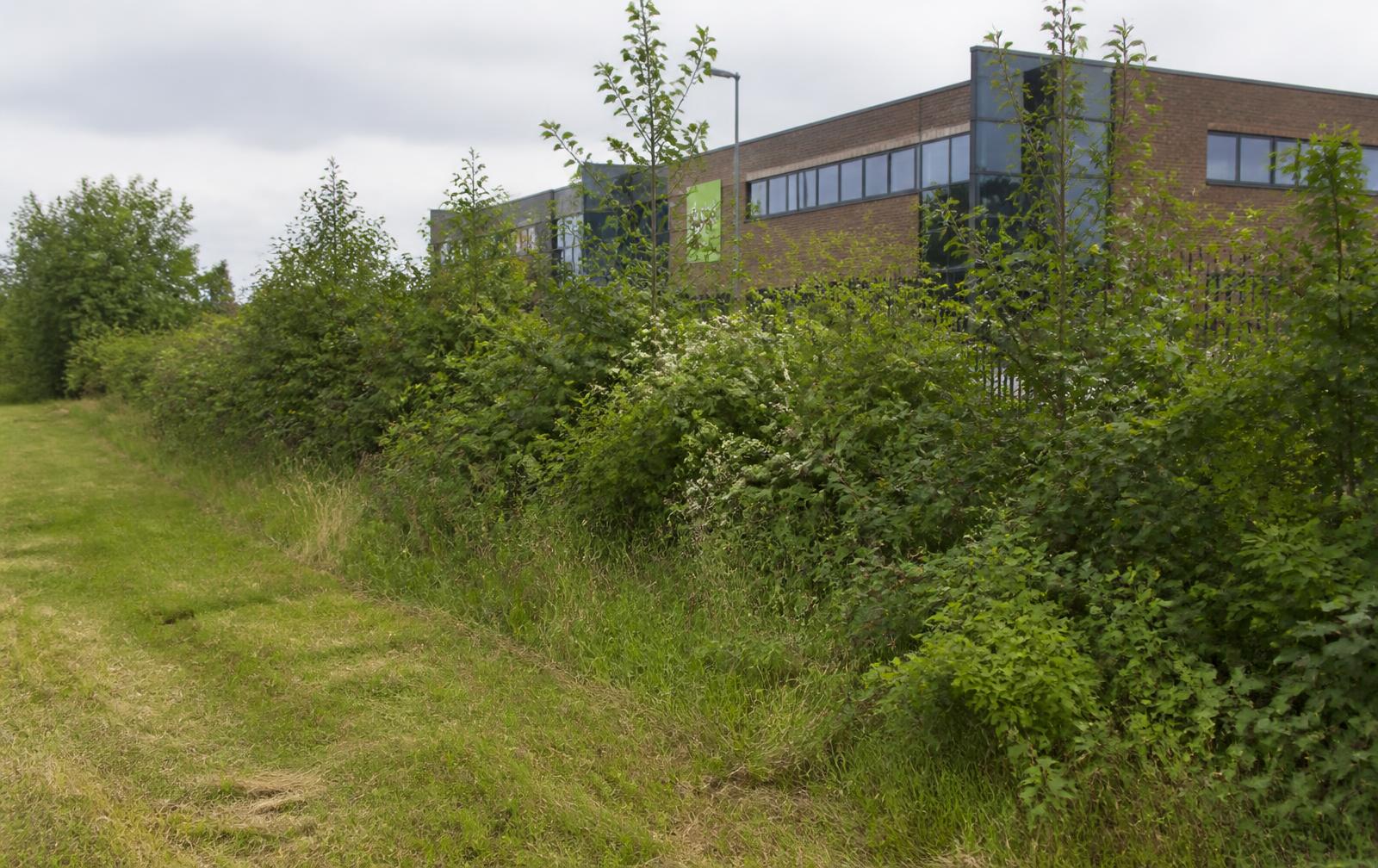
Make roughly 50 metres of new landscape element possible: a varied hedgerow of mainly native shrubs and trees.
Discover this project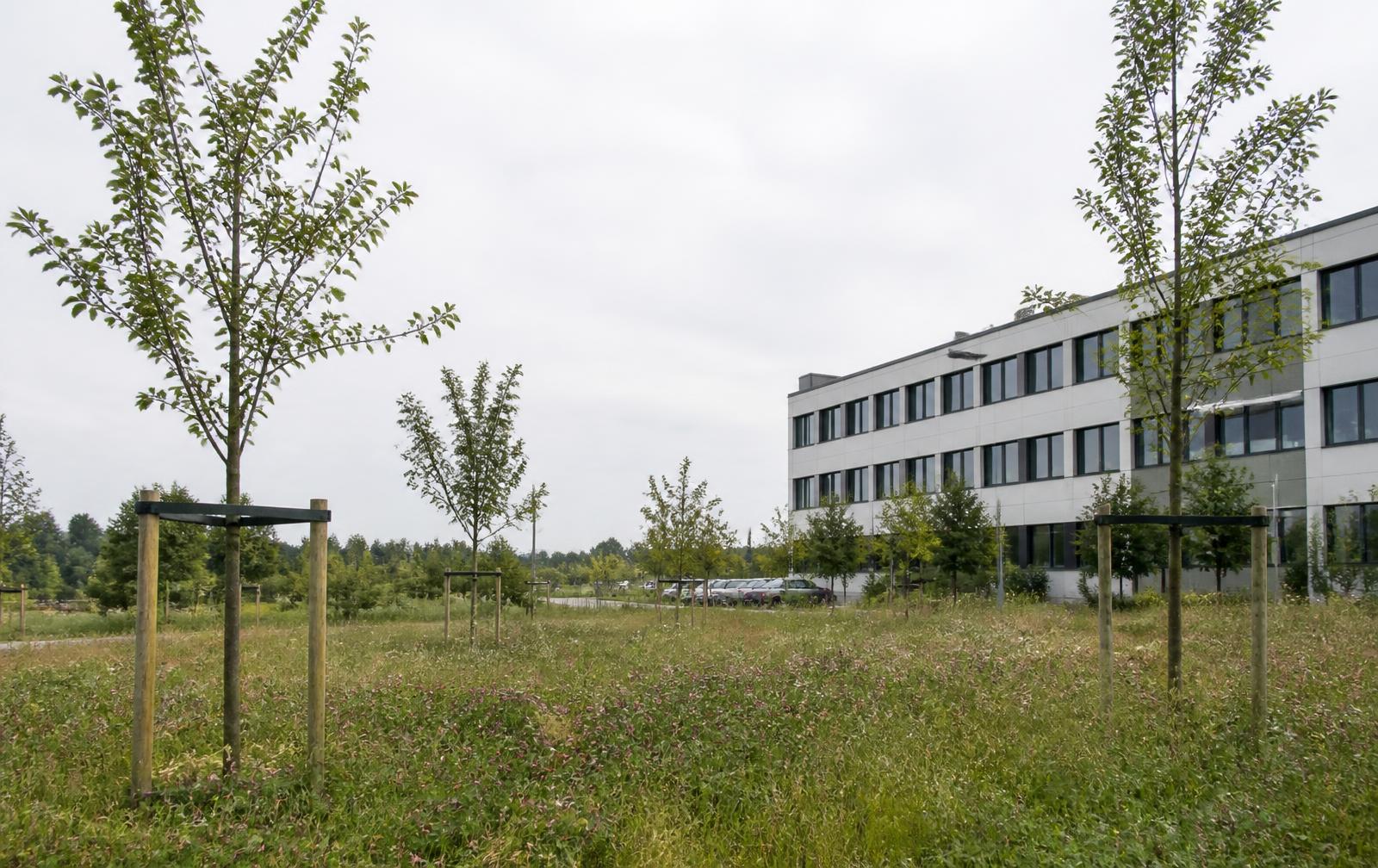
Help plant five quality high-stem fruit trees, with particular attention to old and regional varieties.
Discover this project€ 1.000 — excl. VAT per project and per project year