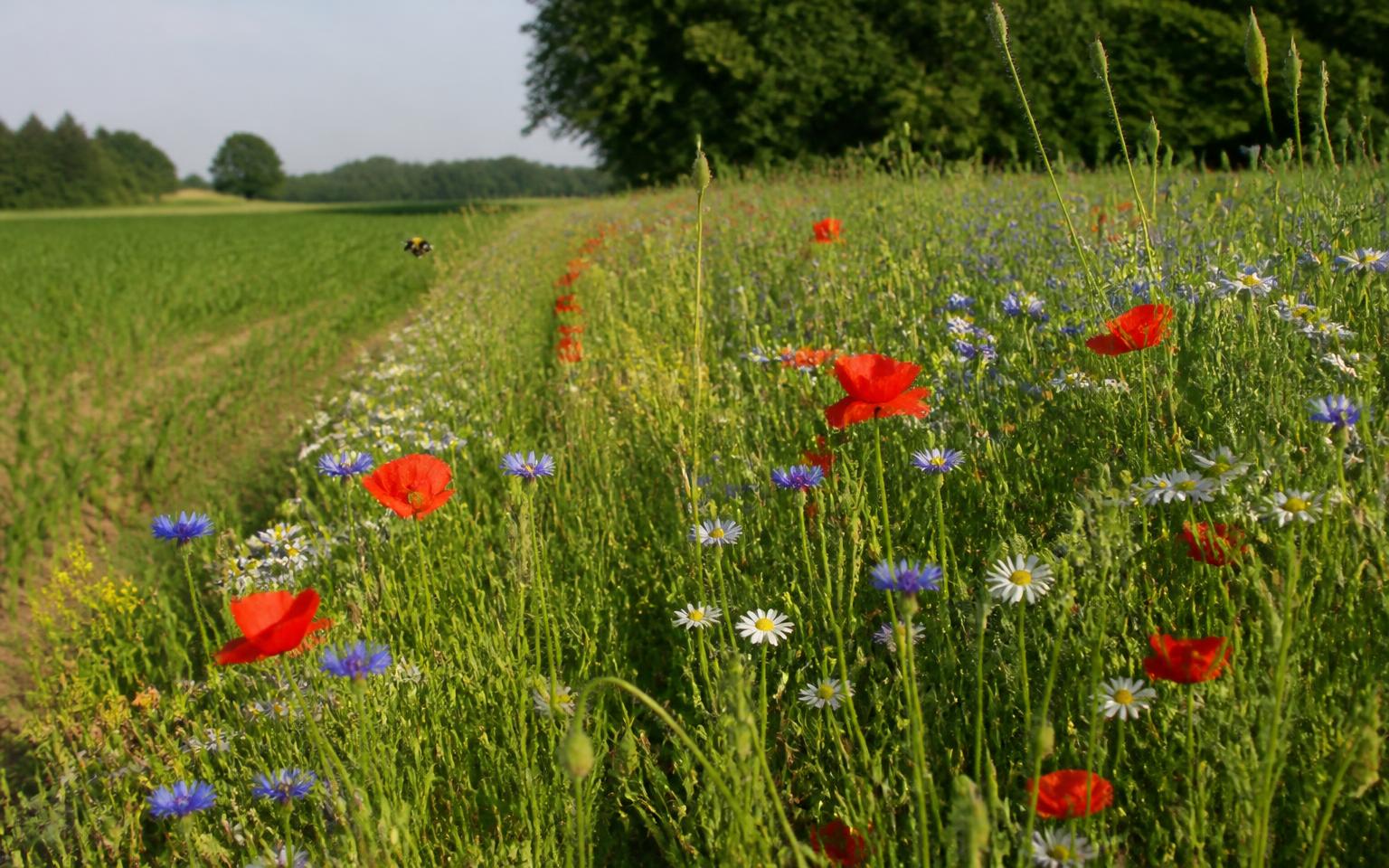
Flower meadows
More flowers, more pollinators, more colour — a food source for wild bees, bumblebees and butterflies.
Discover this projectOur projects
Landscape management with sheep, goats or alpacas instead of machinery.
en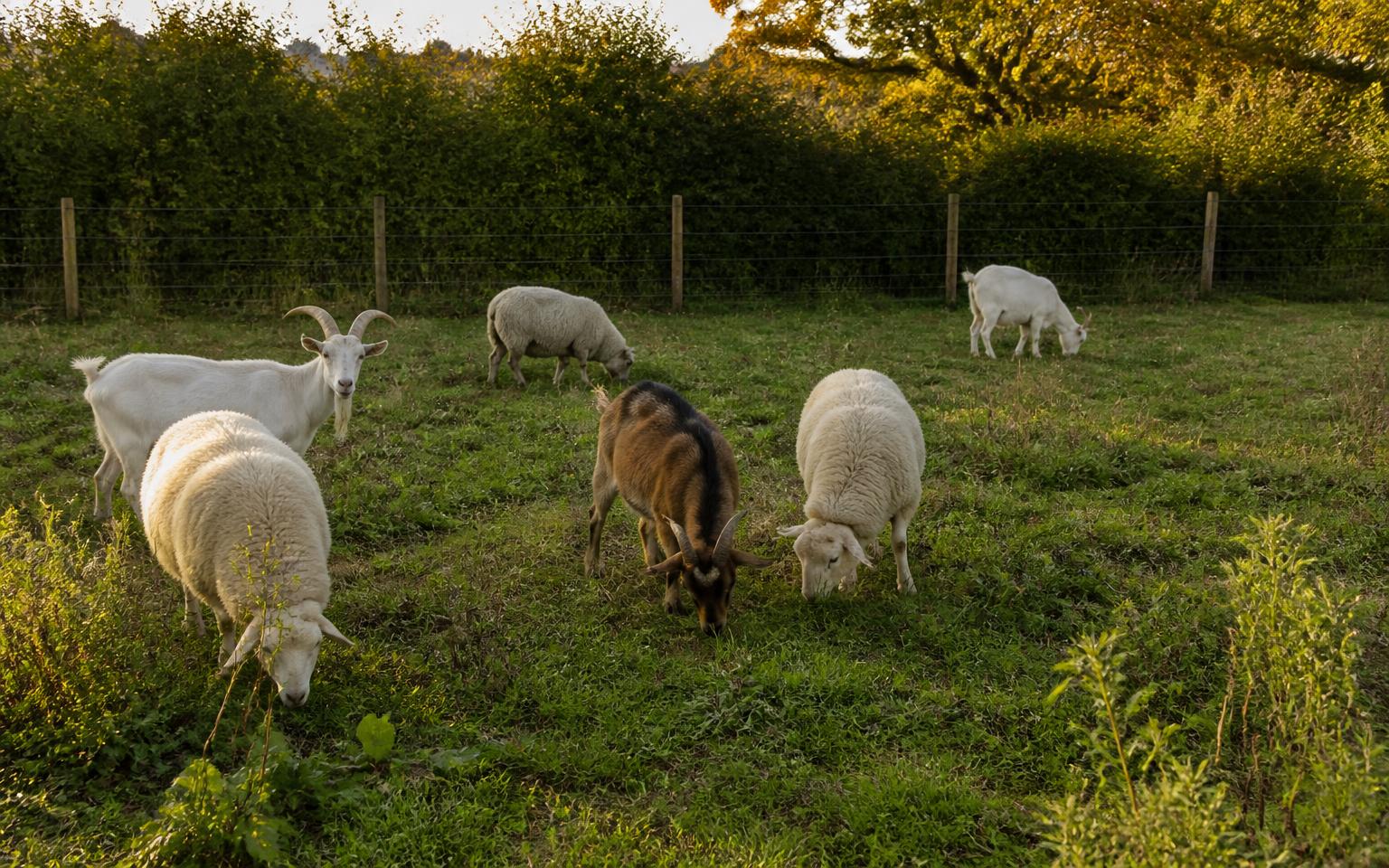
When people think of managing nature areas, they often think of mowers, tractors or brushcutters.
Yet in more and more places, a different approach is being chosen: Animals.
Sheep, goats and other grazers are used today across Europe to manage nature reserves, grasslands and verges in a sustainable way. Not because they can fully replace machinery, but because they create a different kind of landscape.
A landscape with more variety. And it is precisely that variety that forms the basis of biodiversity.
That is why KURBI is exploring how nature grazing can find a place within a local project.
Nature grazing means that animals are deployed in a controlled and responsible way to manage vegetation.
Unlike a mower, animals graze selectively. Some plants are eaten. Others are left standing.
This creates differences in vegetation height, open patches and shelter for insects and small animals.
That results in a more varied landscape in which more species find a suitable habitat.
KURBI wants to strengthen biodiversity by making as much use as possible of natural processes.
Where conditions are suitable, grazing can contribute to more variety in vegetation; greater structural diversity; better living conditions for insects; more food for birds; a more attractive landscape; and ecological management with fewer mechanical interventions.
Nature grazing is not an end in itself. It is one of the possible tools within a broader vision of biodiversity management.
Together with farmers, animal keepers and other partners, we will investigate which grazers best suit the different locations.
Depending on circumstances, a choice can be made for, among others:
Sheep: Excellently suited to managing grasslands and flower-rich vegetation.
Goats: Particularly useful in places where shrubs or woody regrowth also need to be controlled.
Alpacas: Depending on the location and management objectives, they can play a role within extensive grazing. They also add to the experiential value of the landscape.
Other suitable grazers may also be considered if they better match the ecological objectives of a particular location.
Within KURBI, animals are never deployed purely as an attraction. Their welfare is always the starting point. This means, among other things: sufficient food; permanent access to drinking water; suitable shelter; safe fencing; daily checks; professional care; veterinary follow-up when needed; and respect for the natural behaviour of the animals.
Nature grazing does not only create ecological benefits. It also brings life back into the landscape. Walkers see grazing animals. Children pause for a moment. Visitors experience how agriculture and nature can reinforce each other. This makes biodiversity visible. Not through information panels alone. But through living landscapes.
For the implementation of nature grazing, KURBI wants to cooperate as much as possible with farmers and animal keepers from the region. Local knowledge is, after all, an important added value. Together we can look for locations where animals can contribute to nature management in a safe and responsible way. This creates not only extra biodiversity, but also new opportunities for local agriculture.
For € 1,000 excluding VAT per year, your business supports, for one year, a nature grazing project (4 grazers) within KURBI.
Depending on the chosen location, your contribution can be used, among other things, for: installing and maintaining safe fencing; providing drinking water; supporting the farmer or animal keeper involved; daily monitoring of the animals; land management; and maintaining the infrastructure. Your contribution therefore does not support one particular animal.
It supports a sustainably managed nature grazing project.
For nature: More variety in vegetation. More shelter. More biodiversity.
For farmers: An additional economic activity that fits perfectly alongside conventional farming. An opportunity to make productive use of less profitable land. A chance to actively contribute to a visible ESG project in their own municipality.
For visitors: A living landscape in which nature management becomes visible. A unique walking experience in which agriculture and biodiversity meet.
For businesses: A concrete biodiversity project that combines nature management, animal welfare and local cooperation. A credible way of giving substance to corporate social responsibility.
For the local area: A more attractive landscape. More biodiversity. More cooperation between agriculture, businesses and nature. A project that fits perfectly with the rural character of the municipality.
🐑 Grazing is used today in numerous places in Flanders for nature management.
🌿 Grazers naturally create a varied landscape with both short and taller vegetation.
🦋 Many butterflies, wild bees and grasshoppers benefit from that variety.
🌾 Grazing can be a valuable addition to conventional mowing regimes.
🚜 Machines and grazers do not exclude each other, but can complement each other perfectly.
Do the animals stay permanently in the same location?: Not necessarily. Depending on the vegetation, the season and the management objectives, animals may be deployed temporarily or for longer periods.
Why has KURBI not yet definitively chosen one animal species?: Because every location is different. The choice must be tailored to the vegetation, the surface area, the nature objectives and animal welfare.
Can a farmer take part in this project?: Certainly. KURBI specifically wants to cooperate as much as possible with local farmers and animal keepers. Anyone interested in taking part is always welcome to get in touch.
For centuries, grazing animals were part of the Flemish landscape. KURBI does not simply want to copy that tradition, but to give it a place once again within a contemporary vision of biodiversity. Not by pitting nature and agriculture against each other. But by connecting the two. Because a landscape in which nature, agriculture and entrepreneurship work together is stronger, more resilient and more attractive for everyone.
Whether you are a business wishing to support a nature grazing project, or a farmer wishing to help with its implementation: KURBI would be glad to talk with you.
External links open in a new tab. KURBI is not responsible for the content of external websites.
More flowers, more pollinators, more colour — a food source for wild bees, bumblebees and butterflies.
Discover this project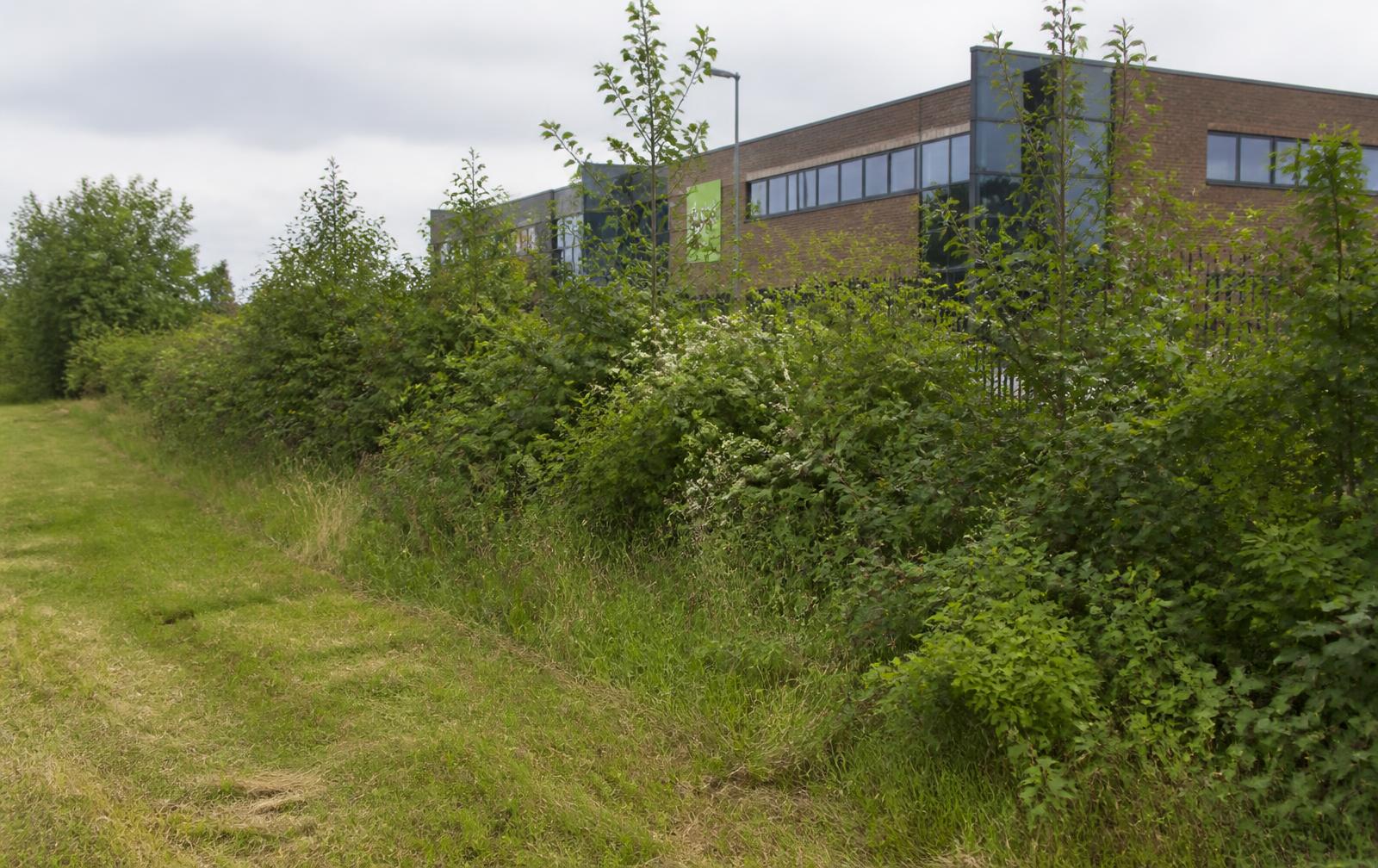
Make roughly 50 metres of new landscape element possible: a varied hedgerow of mainly native shrubs and trees.
Discover this project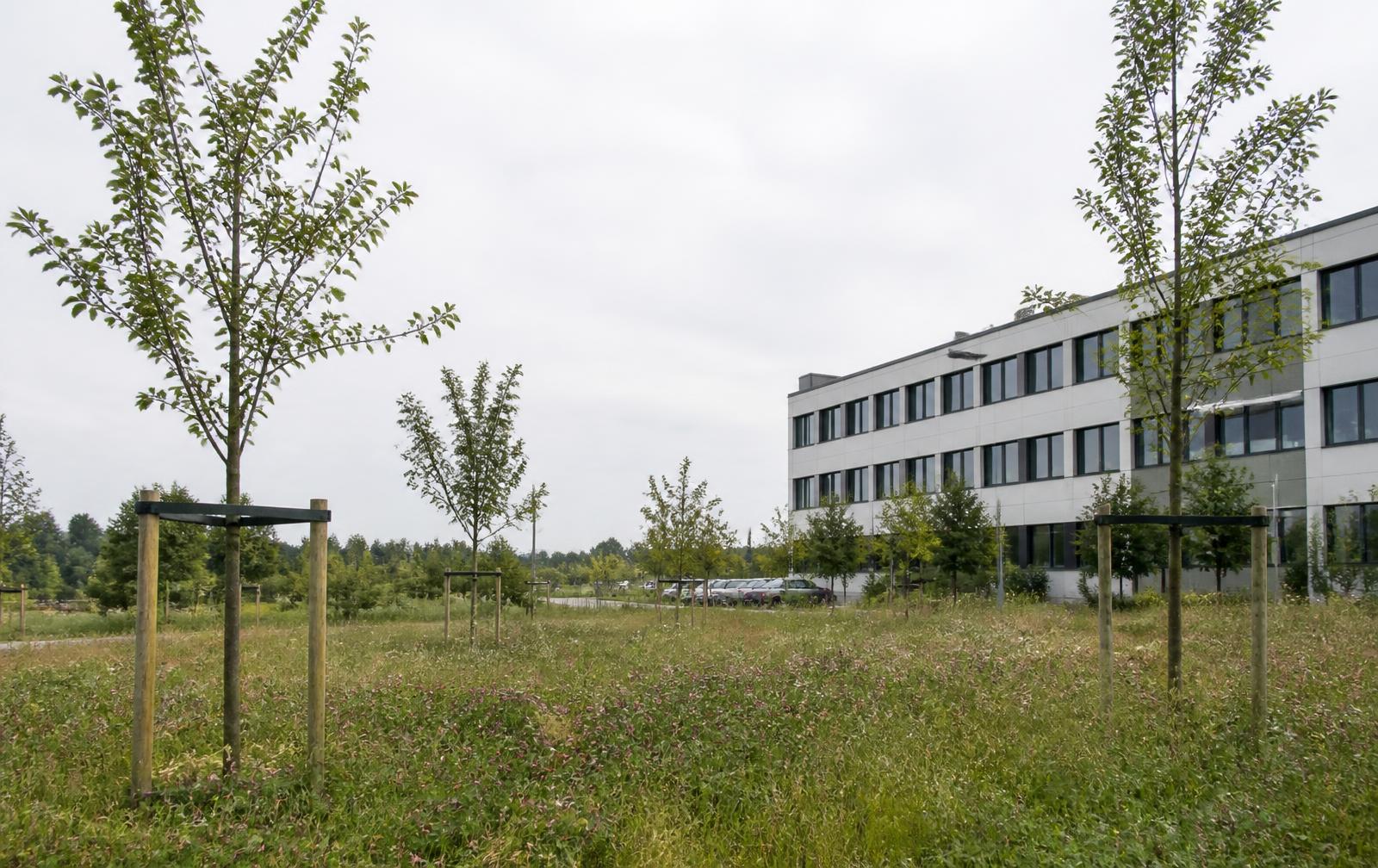
Help plant five quality high-stem fruit trees, with particular attention to old and regional varieties.
Discover this project€ 1.000 — excl. VAT per project and per project year